Choosing jewellery as a Muslim goes beyond aesthetics. You are not simply selecting something beautiful. You are making a choice that reflects your faith, your values, and in many cases, the depth of your care for someone you love. Understanding the types of halal jewellery materials means looking at metal permissibility, ethical sourcing, and how a transaction is conducted, all at once. This guide walks you through every consideration so that whether you are buying for yourself, a spouse, or a child, you can choose with both confidence and intention.
Table of Contents
- Understanding halal jewellery criteria: materials, sourcing, and transactions
- Common halal jewellery materials: metals for Muslim men and women
- Gemstones and traceability: making ethical halal choices
- Affordable and durable halal jewellery material options for meaningful gifts
- Comparing halal jewellery materials: durability, price, and ethical impact
- The overlooked role of durability and transparency in halal jewellery
- Explore faith-inspired halal jewellery collections at CAIRO
- Frequently asked questions
Key Takeaways
| Point | Details |
|---|---|
| Halal criteria | Halal jewellery depends on material rules and ethical sourcing, not on a specific certification. |
| Metal choices | Gold is prohibited for men but allowed for women; other metals like silver and platinum are halal for all. |
| Ethical sourcing | Traceability and transparency in metal and gemstone origins ensure halal compliance. |
| Durability matters | Durable materials prolong meaning and support halal values by reducing waste. |
| Verified suppliers | Ask for documentation and treatment disclosures to verify halal jewellery authenticity. |
Understanding halal jewellery criteria: materials, sourcing, and transactions
The most important thing to understand first is that the jewellery itself is rarely the problem. As the halal jewellery gifting guide explains, jewellery is not inherently halal or haram. What matters is how it is sourced, sold, and worn. That distinction changes everything about how you shop.
The halal criteria for jewellery fall into three areas:
- Material permissibility: Certain metals are restricted for men in Islamic rulings. Gold in particular is widely considered impermissible for men to wear, while women face no such restriction.
- Ethical sourcing: Knowing where your metal or gemstone comes from matters. Were workers treated fairly? Was the transaction honest? Were karat weights and stone treatments disclosed accurately?
- Transaction integrity: Even gold that is otherwise permissible for women can become problematic in the wrong transaction. Islamic scholars note that purchasing gold is valid only if delivery occurs within the same contractual session, which has important implications for online purchases.
“Halal jewellery is not just about what the piece is made of. It is about how it was made, how it was sold, and how honestly it was presented.” This principle guides every intentional jewellery choice.
When you are shopping halal Muslim jewelry online, verify that sellers disclose metal composition, karat weight, plating thickness, and gemstone origin. A seller who cannot or will not share this information is a seller worth walking away from.
Pro Tip: Ask any jewellery seller directly for a product specification sheet or hallmark documentation before purchasing. Transparent sellers will respond promptly and clearly.
Silver carries its own spiritual weight in Islamic tradition, and understanding the spiritual meaning of silver can deepen your appreciation for it as a halal jewellery material beyond its practical value.
Common halal jewellery materials: metals for Muslim men and women
With halal criteria in mind, let’s look at which metals are considered permissible and why they matter differently for men and women.
For men, the ruling is clear across most Islamic schools of thought. Men must avoid gold settings; silver, platinum, titanium, and stainless steel are all permissible alternatives. Each of these metals brings its own character to a piece of jewellery.
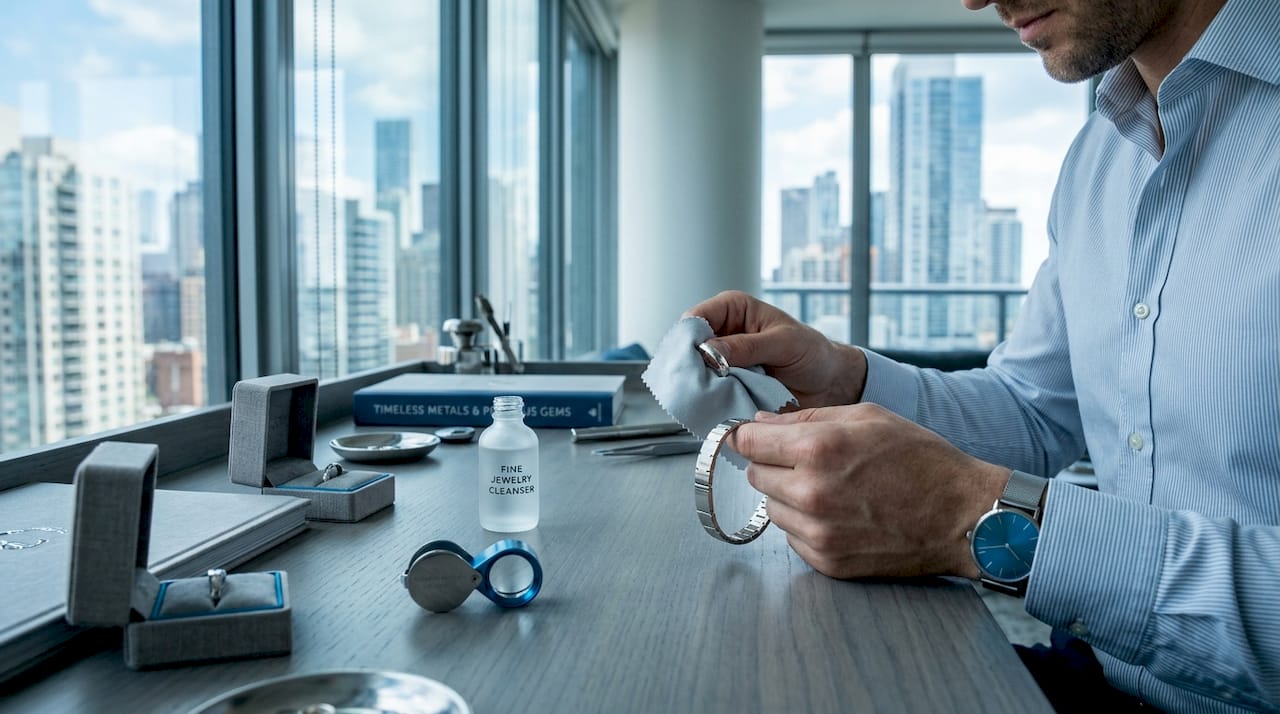
For women, the field is much broader. Gold and silver are allowed for women, and both are used widely in Islamic jewellery traditions across every culture, from South Asia to the Arab world to West Africa.
Here is a breakdown of the most common halal metals:
- Sterling silver (925): Durable, widely available, and deeply rooted in Islamic tradition. Permissible for both men and women.
- Platinum: One of the most durable and hypoallergenic metals available. Permissible for men and women. Its rarity makes it a premium gift choice.
- Titanium: Exceptionally strong, lightweight, and non-toxic. A practical choice for those with sensitive skin.
- Stainless steel: The most accessible of the halal metals. Resistant to tarnish and corrosion, it holds plating well and works beautifully for everyday pieces.
- 18K+ solid gold: Permissible for women. Higher karat gold contains more pure gold, which means greater value and a warmer color tone. 18K gold (75% pure) balances wearability with investment value.
| Metal | Halal for men? | Halal for women? | Durability | Price range |
|---|---|---|---|---|
| Sterling silver | Yes | Yes | High | Moderate |
| Stainless steel | Yes | Yes | Very high | Low to moderate |
| Titanium | Yes | Yes | Very high | Moderate |
| Platinum | Yes | Yes | Very high | High |
| 18K gold | No | Yes | High | High |
| 24K gold | No | Yes | Moderate (soft) | Very high |
Pro Tip: When buying silver jewellery in Islam as a gift for a man, look for pieces with a 925 sterling silver hallmark. This guarantees 92.5% pure silver and protects you from alloys that may contain nickel or lead.
Stainless steel deserves special attention for gifting. It does not tarnish, it holds gold and silver plating longer than brass, and it is entirely non-toxic. For Quranic verse pieces meant to be worn daily, stainless steel as a base metal offers lasting dignity without the upkeep burden.
Gemstones and traceability: making ethical halal choices
Beyond metals, gemstones require careful ethical consideration to ensure your choice stays consistent with halal values.
The core issue is transparency. Natural gemstones like sapphires, emeralds, and rubies often pass through multiple hands before reaching a jewellery seller, and treatments or enhancements are routinely applied without disclosure. Heat treatment, fracture filling, and surface coating all affect a stone’s value and authenticity. If a seller does not disclose these, that is a transparency problem, and transparency is inseparable from halal ethics.
What to look for when evaluating halal-compatible gemstones:
- Origin reports: Reputable gemological labs like GIA or AGL issue origin certificates for high-value stones. Favor suppliers providing origin reports and full treatment disclosures.
- Lab-grown stones: Lab-grown diamonds and sapphires are chemically identical to their mined counterparts, but their supply chain is traceable from creation. They cost significantly less and carry no conflict sourcing concerns.
- Fair labor certification: Brands that reference fair labor standards in their sourcing practices align more closely with the Islamic principle of adl (justice) in commerce.
- Recycled settings: Metals that are recycled and recast carry a smaller environmental and ethical burden than newly mined material.
For those exploring shopping ethical gemstone jewellery online, a good starting point is simply to ask the seller where the stone is from and whether it has been treated. A trustworthy brand will have that answer ready.
Pro Tip: If you are looking for affordable gemstones without sacrificing traceability, lab-grown options often cost 50 to 80 percent less than mined equivalents while offering equal or superior clarity documentation.
Not every halal jewellery piece needs to feature gemstones. Many of the most spiritually meaningful pieces carry Quranic inscriptions instead, which carry weight no stone can match.
Affordable and durable halal jewellery material options for meaningful gifts
Knowing how to judge gemstones, let’s review practical material options matched to your budget and gifting needs.
The range of materials in halal jewellery spans from solid gold and sterling silver to gold-filled, vermeil, and plated brass, with very different durability and price implications at each level. Choosing the right tier depends on how long you want the piece to last and what it represents.
Here is how the tiers break down:
- Solid gold (18K or higher): The most durable option. Appropriate for heirloom pieces, wedding jewellery, and deeply meaningful gifts. Does not tarnish, does not need replating, and holds its value over time.
- Platinum or solid titanium: Premium tier for those avoiding gold. Nearly indestructible and hypoallergenic. Excellent for everyday wear or significant gifting occasions.
- Sterling silver (925): Mid-tier in price, high in durability and meaning. Tarnishes with time but polishes back easily. Ideal for Quranic verse pieces and personal remembrance jewellery.
- Vermeil (gold-plated sterling silver): A durable gold-plated option that balances wearability and cost. The sterling silver base means the piece will not corrode even if the plating wears. A strong choice for Eid and Nikkah gifts.
- Gold-filled: A thicker layer of gold bonded to a base metal core. More durable than standard plating and often marketed as a mid-range luxury option.
- Gold-plated stainless steel: The most accessible option with good tarnish resistance. The stainless steel base prevents rust and corrosion, making it the best budget-tier choice for long-term wear.
- Plated brass or handmade beaded pieces: Better suited to trend-driven or occasional wear. Lower durability but often beautiful and expressive.
Pro Tip: For gifting, consider how the piece will be worn. A daily wear item deserves at minimum a stainless steel or sterling silver base. Explore meaningful layered jewellery ideas for inspiration on building a personal collection across different tiers.
Durability is not just practical. It is ethical. A piece meant to carry the words of Allah should not fade in six months.
Comparing halal jewellery materials: durability, price, and ethical impact
To help finalize your choice, here is a clear side-by-side comparison of halal jewellery materials by the factors that matter most.
| Material | Durability | Ethical sourcing potential | Avg. price tier | Best suited for |
|---|---|---|---|---|
| Recycled 14K gold | Very high | High (Fairmined/recycled) | High | Heirloom, Nikkah gifts |
| Platinum | Very high | Moderate to high | Very high | Long-term daily wear |
| Sterling silver (925) | High | Moderate to high | Moderate | Personal and faith gifts |
| Gold-plated stainless steel | High | Moderate | Low to moderate | Everyday Quranic pieces |
| Vermeil | Moderate to high | Moderate | Moderate | Eid, special occasions |
| Lab-grown gemstone settings | High | High (traceable) | Moderate | Statement pieces |
| Gold-plated brass | Low to moderate | Low | Low | Trend-driven, occasional |
Recycled metals reduce environmental impact significantly and offer one of the clearest signals of ethical sourcing available to buyers today. When you see a brand referencing Fairtrade or Fairmined certification, that is a meaningful signal worth noting.
Beyond certifications, look for:
- Hallmarks stamped directly on the metal, confirming karat purity
- Seller invoices that document metal type and weight
- Written treatment disclosures for any gemstones included
- Repairability: Can the piece be resized, repolished, or replated? Repairable jewellery reduces waste and extends its life, which aligns with halal values around stewardship
The most thoughtful gift is one that will still carry meaning five years from now.
The overlooked role of durability and transparency in halal jewellery
Most guides on halal jewellery stop at permissibility. Gold for women, not for men. Silver is fine for everyone. That is the surface level. But after years of observing how Muslim families approach jewellery gifting, we have found that the deeper question is almost never asked: How long will this piece last, and can I trust the person who sold it to me?
Durability and repairability are genuinely part of the halal-ethical value proposition, not afterthoughts. A piece engraved with Ayatul Kursi that flakes and tarnishes within a year carries a kind of disrespect in its decay. The material should honor the message it carries.
Transparency operates the same way. Verification signals like hallmarks and stone traceability are not just practical safeguards. They are expressions of a seller’s integrity, and integrity is the foundation of every halal transaction.
The uncomfortable truth is that beautiful packaging and Islamic branding can disguise poor material quality. We have seen gold-plated brass pieces marketed at premium prices with no disclosure of the base metal. That is not just a consumer complaint. It is a breach of the honesty that Islamic commerce demands.
When you review safe halal jewellery shopping tips, you will notice that the same principles repeat: ask for documentation, verify hallmarks, and choose sellers who welcome your questions rather than deflect them. These are not paranoid behaviors. They are the natural habits of a buyer who understands that halal means honest all the way through.
Buy pieces that are made to last. Ask questions before you pay. Give gifts that will still mean something a decade from now.
Explore faith-inspired halal jewellery collections at CAIRO
Now that you know how to choose halal jewellery materials wisely, the next step is finding pieces that carry both the right material integrity and genuine spiritual meaning.
At CAIRO, every piece is designed with Islamic symbolism at its center. The Ayatul Kursi jewellery collection features stainless steel-based pieces with gold and silver plating, built to carry the most powerful verse of the Quran close to you every day. Whether you are looking for something for yourself or someone you would make dua for, these pieces are made to mean something. Browse the full range and complete your halal jewellery look, or shop CAIRO’s collections to find the piece that speaks to your intention.
Frequently asked questions
Are men allowed to wear gold jewellery in Islam?
Islamic rulings generally prohibit men from wearing gold jewellery. Silver, platinum, and stainless steel are considered permissible alternatives for men across most scholarly opinions.
Is gold jewellery halal for Muslim women to wear?
Yes. Gold and silver are allowed for women, and gold jewellery is considered permissible according to the majority of Islamic scholars.
What should I look for to ensure gemstones in halal jewellery are ethically sourced?
Look specifically for sellers who provide origin reports and fully disclose any treatments or enhancements applied to their stones before sale.
Can lab-grown diamonds be considered halal jewellery materials?
Yes. Lab-grown diamonds are traceable and ethically sourced by design, making them a strong halal-compatible gemstone option with a significantly lower environmental impact.
Does buying gold jewellery require any specific halal transaction conditions?
Yes. To keep the transaction halal, the gold must be delivered and possession taken within the same contractual session, even if payment is finalized later.