Gold-plated jewellery is defined as a base metal, typically stainless steel or brass, coated with a thin layer of real gold through electroplating. That gold layer is beautiful, but it is also delicate. Without proper gold plated jewellery care tips built into your daily routine, the plating wears away faster than it should. The good news is that the right habits, cleaning methods, and storage choices can keep your pieces looking radiant for years. Whether you wear an Ayatul Kursi Bracelet every day or save a special necklace for occasions, this guide gives you everything you need to protect what matters.
What tools and products do you need for gold plated jewellery care?
The right tools make the difference between cleaning that restores and cleaning that damages. Commercial jewelry cleaners typically contain harsh chemicals that strip plating. The safest approach uses mild dish soap and warm water applied with soft tools.
Here is what to keep on hand:
- Microfiber cloth: Removes surface oils and residue without scratching. Use it for a quick wipe after every wear.
- Mild dish soap: Dawn or a similar gentle formula diluted in lukewarm water is the gold standard for safe cleaning.
- Soft-bristle toothbrush: Reaches engraved details and chain links without abrading the gold surface.
- Lint-free cloth: Used for drying immediately after cleaning. Never substitute paper towels, which can scratch.
- Soft pouches or compartmentalized jewelry boxes: Prevent pieces from rubbing against each other during storage.
- Silica gel packets: Control moisture inside storage containers and slow oxidation of the base metal.
Avoid cotton balls, rough cloths, and anything labeled “polishing compound.” These products are designed for solid metals and will scratch or strip gold plating on contact.
Pro Tip: Keep a small microfiber cloth in your jewelry drawer so the wipe-down habit becomes automatic. Thirty seconds after every wear adds up to months of extended plating life.
How often and how should you clean gold plated jewellery?
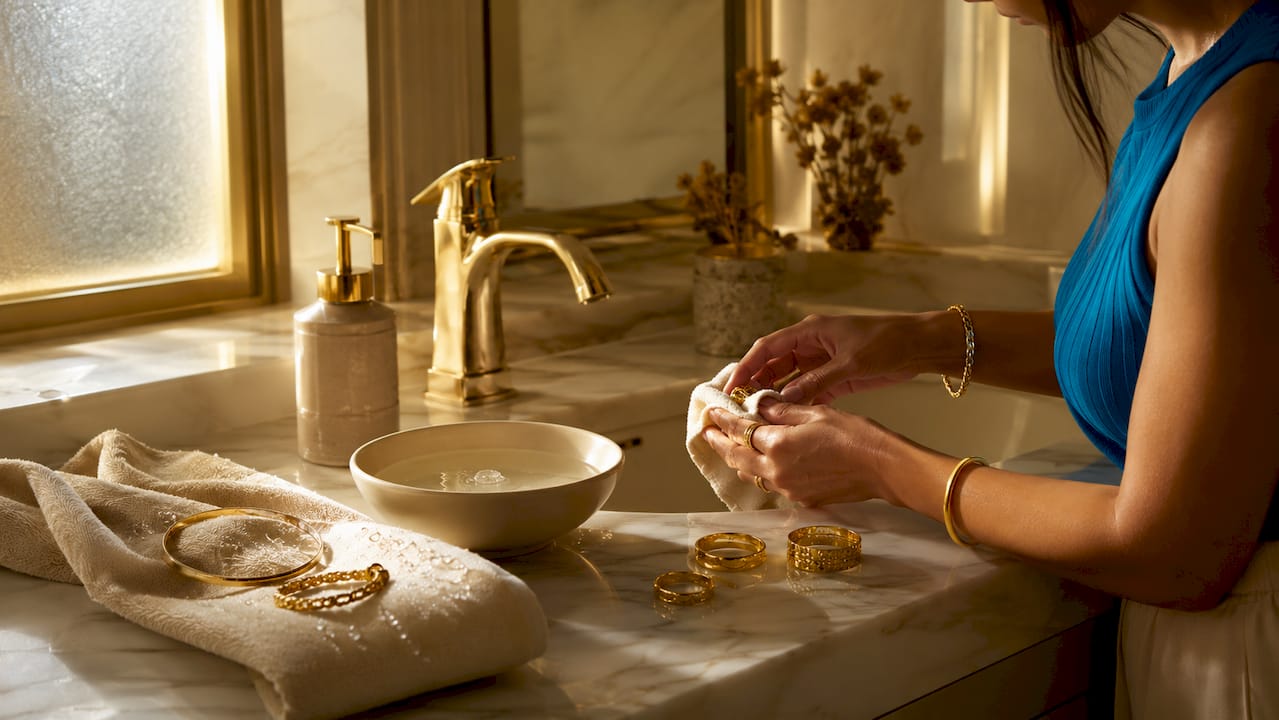
Cleaning frequency depends directly on how often you wear a piece. Daily wear pieces need a gentle soap-and-water clean every 2–4 weeks, while occasional wear pieces only need attention every 2–3 months. Over-cleaning is a real risk. Each wash cycle introduces water and friction, both of which gradually thin the plating.
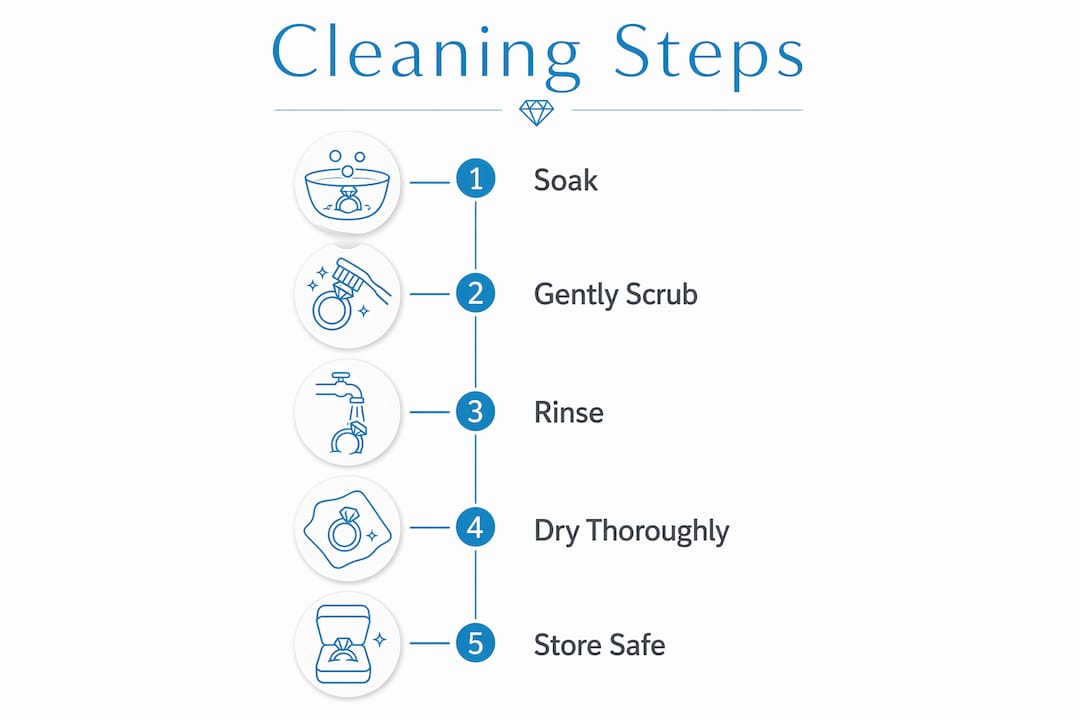
Follow this step-by-step process for a safe deep clean:
- Fill a small bowl with lukewarm water and add two drops of mild dish soap.
- Place your piece in the solution and let it soak for no more than 3–5 minutes. Extended soaking compromises the bond between the gold layer and the base metal.
- Use a soft-bristle toothbrush to gently scrub engraved areas, clasps, and chain links.
- Rinse under cool, running water briefly. Do not let the piece sit in rinse water.
- Pat dry immediately with a lint-free cloth. Never air-dry.
- Let the piece rest on a clean cloth for five minutes before storing.
The drying step is the one most people skip, and it is the most consequential. Water trapped in micro-pores accelerates oxidation of the base metal beneath the plating. That oxidation is what causes the dark, dull patches that look like tarnish but are actually base metal corrosion showing through.
Pro Tip: Never clean gold-plated pieces over an open drain. A small bowl keeps everything contained and prevents losing delicate clasps or pendants.
Between deep cleans, a dry wipe with a microfiber cloth after every wear removes skin oils and lotion residue before they build up. This simple habit alone extends the time between full washes significantly.
What daily habits protect your gold plated jewellery from damage?
Behavioral habits cause more plating wear than cleaning mistakes. The single most protective rule is called “Last On, First Off.” Applying jewellery after all skin products have dried and removing it before any water contact greatly reduces chemical damage from perfumes, lotions, and humidity. This one change protects the plating more than any cleaning product.
“Gold-plated jewellery should be treated as a ‘conscious wearer’ accessory. Put it on last, take it off first. Not because it is fragile, but because it deserves the same mindfulness as the intention behind wearing it.”
Beyond the Last On, First Off rule, these daily habits matter:
- Remove before water exposure. Showering, swimming, and washing dishes all expose plating to prolonged moisture. Chlorinated pool water and saltwater are especially damaging and cause irreversible plating wear.
- Remove before exercise. Sweat contains salts and acids that dull the gold surface over time.
- Remove before sleeping. Friction against pillowcases wears down plating at clasps and edges faster than almost any other habit.
- Inspect regularly. Check clasps, edges, and engraved areas for signs of base metal showing through. Catching high-friction wear early allows for timely professional replating before the damage spreads.
- Apply products first. Perfume, sunscreen, and lotion should be fully absorbed into skin before you put on any piece.
These habits are especially relevant for pieces you wear with spiritual intention, like an Ayatul Kursi Necklace or a With Hardship Comes Ease Necklace. Caring for them consciously reflects the same mindfulness with which they were chosen.
What common mistakes shorten the life of gold plated jewellery?
Most plating damage comes from a handful of repeated mistakes, not a single incident. Knowing what to avoid is as important as knowing what to do.
Cleaning agents that destroy plating:
| Agent | Why It Damages Plating |
|---|---|
| Toothpaste | Abrasive particles scratch and strip the gold layer |
| Baking soda | Micro-abrasive; removes plating with repeated use |
| Ammonia-based cleaners | Chemically dissolves the gold bond |
| Commercial metal dips | Formulated for solid metals; strips plating instantly |
| Rubbing alcohol | Dries out and weakens the plating adhesion over time |
Toothpaste, baking soda, and ammonia-based cleaners cause irreversible plating damage. Many people reach for these because they work on solid gold or silver. On plated pieces, they are destructive.
A second common mistake is misreading dullness as tarnish. Most surface dullness on gold-plated jewellery is caused by skin oils and lotion residue, not tarnish. Gentle soap-and-water cleaning restores original luster in most cases. People who assume they need a stronger cleaner often cause the very damage they were trying to fix.
Air-drying is another underestimated mistake. Leaving a wet piece on a cloth or countertop allows water to sit in the microscopic gaps of the plating. Over time, this causes the base metal to oxidize and push through the gold layer. Pat-drying immediately after every rinse prevents this entirely.
Finally, storing jewellery in the bathroom is one of the most common and damaging habits. Bathroom humidity is constant, and that moisture accelerates both oxidation and tarnish on the base metal beneath the plating.
How should you store gold plated jewellery to maximize longevity?
Storage is the silent factor in how long plating lasts. Storing pieces in dry, cool places separate from other items with silica gel packets prevents both oxidation and the scratching that comes from pieces rubbing together. Most people store all their jewellery in one box or dish. That friction is constant and cumulative.
Follow these storage principles:
- Store each piece separately. Use individual soft pouches, small zip-lock bags, or compartmentalized trays. This prevents chains from tangling and surfaces from scratching.
- Choose a cool, dry location. A bedroom drawer or closed jewelry box away from windows is ideal. Avoid windowsills where sunlight and temperature changes accelerate wear.
- Use silica gel packets. Place one or two inside your jewelry box or storage pouch. Replace them every few months as they absorb moisture over time.
- Keep pieces away from the bathroom. Humidity from showers and sinks is the fastest way to dull plating between wears.
- Lay necklaces flat or hang them. This prevents kinking and reduces stress on clasps, which are the first areas to show plating wear.
| Storage Method | Protection Level | Best For |
|---|---|---|
| Individual soft pouch | High | Daily-wear pieces |
| Compartmentalized tray | High | Multiple pieces |
| Silica gel in closed box | Very High | Long-term storage |
| Open dish or tray | Low | Display only, not recommended |
| Bathroom shelf | None | Avoid entirely |
For travel, the same principles apply. Keeping pieces in their pouches inside a padded case prevents the friction and humidity exposure that comes with bags and luggage. Cairojewellery’s guide on jewellery travel packing covers this in detail for pieces you carry with you on the road.
Key takeaways
Proper gold plated jewellery maintenance requires consistent daily habits, gentle cleaning methods, and dry, separate storage to preserve the gold layer and extend the life of every piece.
| Point | Details |
|---|---|
| Clean at the right frequency | Deep clean daily-wear pieces every 2–4 weeks and occasional pieces every 2–3 months. |
| Never exceed 5 minutes soaking | Extended water exposure weakens the bond between gold and base metal. |
| Use the Last On, First Off rule | Apply jewellery after skin products dry and remove before any water contact. |
| Avoid abrasive cleaning agents | Toothpaste, baking soda, and ammonia strip plating immediately and permanently. |
| Store pieces separately with silica gel | Individual pouches and moisture control prevent scratching and oxidation between wears. |
What i have learned after years of caring for gold-plated pieces
The most common thing I see is people treating gold-plated jewellery as either indestructible or too fragile to wear. Both extremes cause damage. The truth is that these pieces reward conscious, consistent care without demanding much time or effort.
The habit that changed everything for me was the dry wipe. Thirty seconds with a microfiber cloth after every wear removes the oils and residue that slowly dull the surface. Most people skip this because it feels unnecessary. Six months later, they wonder why their piece looks tired.
I also want to flag something most guides overlook: inspect your clasps and edges regularly. A magnifying glass takes ten seconds to use, and catching early plating wear at high-friction points means you can get a piece professionally replated before the base metal is exposed. Replating is affordable. Replacing a meaningful piece is not always possible.
The pieces worth caring for most are the ones that carry meaning. An Ayatul Kursi Ring or an Olive Branch Ring is not just an accessory. It is a reminder. Treating it with care is part of honoring what it represents.
— Elias
Care for your pieces the way they were made to be worn
Cairojewellery designs each piece with both spiritual meaning and lasting quality in mind. The stainless steel base used across the Ayatul Kursi collection and the With Hardship Comes Ease Necklace provides a strong foundation for gold plating, but proper care is what keeps that finish radiant over time.

Whether you are caring for a piece you wear daily or preserving a gift given with love, Cairojewellery’s complete jewellery care guide walks you through every step with the same intention behind each design. Browse the full collection at Cairojewellery and find pieces built to carry meaning, and built to last.
FAQ
How often should you clean gold plated jewellery?
Clean daily-wear pieces every 2–4 weeks with mild soap and water, and occasional-wear pieces every 2–3 months. A dry wipe with a microfiber cloth after every wear reduces the need for frequent deep cleaning.
What is the safest way to clean gold plated jewellery at home?
Soak the piece in lukewarm water with two drops of mild dish soap for no more than 3–5 minutes, gently scrub with a soft toothbrush, rinse briefly, and pat dry immediately with a lint-free cloth.
Does gold plated jewellery tarnish or just get dull?
Most surface dullness is caused by skin oil and lotion residue, not true tarnish. Gentle soap-and-water cleaning restores shine in most cases without any harsh treatment needed.
What should you never use to clean gold plated jewellery?
Avoid toothpaste, baking soda, ammonia-based cleaners, and commercial metal dips. These abrasive and chemical agents strip the gold layer immediately and the damage cannot be reversed.
Where is the best place to store gold plated jewellery?
Store pieces individually in soft pouches or a compartmentalized jewelry box in a cool, dry location away from bathroom humidity and direct sunlight. Adding silica gel packets controls moisture and slows oxidation.