Choosing Islamic jewellery is rarely just about aesthetics. You want a piece that carries real spiritual meaning, holds up through wudu, workouts, and long days, and sits comfortably against your skin during prayer. The stainless steel Islamic jewellery benefits that matter most to Muslims cover all three of those needs at once. Stainless steel, specifically surgical-grade 316L, is the material category that delivers durability, hypoallergenic comfort, and lasting symbolic presence without the fragility or high cost of precious metals. This article breaks down exactly why.
Table of Contents
- Key Takeaways
- 1. The stainless steel Islamic jewellery benefits that define everyday wear
- 2. Water and sweat resistance that fits Muslim daily life
- 3. Hypoallergenic properties for sensitive skin
- 4. Spiritual symbolism made to last
- 5. Tactile design features that support dhikr
- 6. Stainless steel vs. other common Islamic jewellery materials
- 7. How to care for your stainless steel Islamic jewellery
- My honest perspective on wearing Islamic jewellery daily
- Explore Cairojewellery’s stainless steel Islamic pieces
- FAQ
Key Takeaways
| Point | Details |
|---|---|
| Exceptional durability | Stainless steel resists rust, tarnish, and scratches far longer than silver, brass, or plated alternatives. |
| Hypoallergenic comfort | Surgical-grade 316L steel suits sensitive skin, making it ideal for continuous wear during prayer and daily life. |
| Spiritual symbolism supported by material | The durability of stainless steel means Qur’anic engravings and Islamic motifs remain sharp and legible for years. |
| Affordable and accessible | Stainless steel prices stay stable, making layered and meaningful gifting accessible for most budgets. |
| Simple care, lasting beauty | Gentle cleaning and thoughtful storage keep stainless steel pieces looking pristine with minimal effort. |
1. The stainless steel Islamic jewellery benefits that define everyday wear
When people discuss the benefits of stainless steel jewelry, the conversation almost always starts with corrosion resistance. Stainless steel contains chromium, which forms a self-repairing oxide layer that prevents rust and oxidation from developing. For a piece you wear to prayer five times a day, this matters far more than it might seem.
Silver tarnishes. Brass discolors. Gold-plated copper loses its finish within months. Stainless steel simply keeps going, maintaining its appearance for years without the kind of frequent polishing that softer metals demand. If you wear an Ayatul Kursi bracelet daily, you want the engraving to stay crisp, not fade into a green-tinged blur after a few weeks.
This durability is not cosmetic only. It carries a subtle spiritual value too. A piece you can wear without interruption becomes a more constant reminder of faith than one you have to take off, clean obsessively, or replace repeatedly.
2. Water and sweat resistance that fits Muslim daily life
Muslims wash their hands and perform wudu multiple times each day. That level of moisture exposure will deteriorate most fashion jewelry quickly. Stainless steel handles it without issue. The metal’s protective oxide layer prevents rust even with frequent contact with water, soap, and sweat.
This is a genuine practical advantage that many buyers overlook until they have already ruined a less durable piece. Whether you are making wudu at fajr or exercising between work and prayer, your jewellery stays intact. No discoloration on your wrist. No green marks. No rushed removal before washing.
For active Muslims especially, the ability to wear a piece continuously without worry supports something deeper: an unbroken physical connection to a verse, a name, or a reminder that matters to you.
Pro Tip: If your stainless steel piece has a gold or rose-gold plating, pat it dry after wudu rather than rubbing. The base metal is water-resistant, but the plating coating benefits from gentle treatment to extend its life.
3. Hypoallergenic properties for sensitive skin
The comfort side of Islamic jewellery self-care benefits is easy to underestimate until your wrist breaks out during Ramadan from a cheap alloy ring. Surgical-grade 316L stainless steel is hypoallergenic and suitable for sensitive skin because it avoids the nickel content and low-grade alloy combinations that cause redness and irritation.
This matters especially for:
- People who wear jewellery during sleep or extended prayer sessions
- Children and those with skin conditions who want to carry Islamic reminders close
- Anyone who has had repeated reactions to fashion jewelry in the past
Comfort during wear is not a luxury consideration. When a piece sits on your skin for most of the day, how it feels physically shapes how consistently you wear it, and consistent wear is what gives the piece its meaning over time.
Pro Tip: When buying stainless steel Islamic jewelry, look for pieces specifically labeled 316L or surgical steel. That grade certification is what guarantees the hypoallergenic quality, not just the term “stainless steel” alone.
4. Spiritual symbolism made to last
The spiritual meaning of jewellery in Islam goes well beyond decoration. Jewellery in Islamic practice functions as a tool for remembrance, self-soothing, and faith identity. The material you choose shapes how well a piece holds that role over time.
Common Islamic design themes on stainless steel pieces include:
- Ayatul Kursi, the Throne Verse from Surah Al-Baqarah, engraved with fine detail
- The name of Allah in Arabic calligraphy
- Qur’anic phrases like “Inna ma’al usri yusra” (“Verily, with hardship comes ease”)
- The Kaaba, the crescent and star, and other cultural symbols of Muslim identity
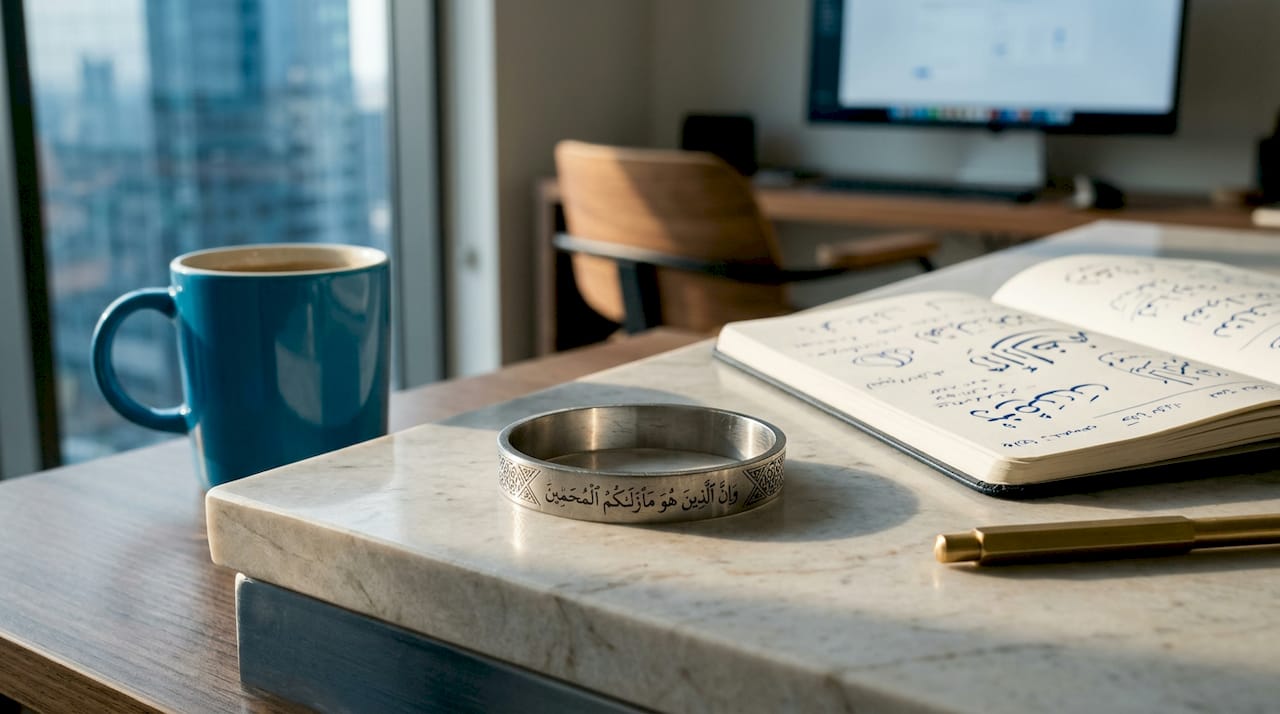
Stainless steel’s hardness and scratch resistance means these engravings stay legible year after year. On a softer metal, fine Arabic script can blur or wear away. On stainless steel, the words remain. That is not a small thing when the words are sacred.
That said, the spiritual benefit comes from intention and use, not the metal alone. Stainless steel creates the conditions for consistent wear and lasting symbolism. What you do with it spiritually is up to you.
5. Tactile design features that support dhikr
Some stainless steel Islamic jewelry is designed with physical engagement in mind. Tasbih rings, for example, include rotating elements or grooves that provide repeatable tactile cues for dhikr, the practice of reciting Allah’s names or praises throughout the day. Jewellery worn regularly as a dhikr aid becomes part of daily micro-rituals, deepening its meaning beyond what any aesthetic description can capture.
The weight and smooth finish of stainless steel contribute to this. It feels substantial without being heavy. The coolness of the metal against skin has a grounding quality. When you reach down and feel the verse engraved on your wrist, it draws your attention back, however briefly, to what matters.
You can explore how pairing jewellery with supplication amplifies this practice further. The physical piece becomes an anchor for the spiritual habit.
6. Stainless steel vs. other common Islamic jewellery materials
Understanding why stainless steel stands out requires a direct comparison with the alternatives many Muslims consider.
| Material | Durability | Allergy risk | Water resistance | Cost | Best use |
|---|---|---|---|---|---|
| Stainless steel (316L) | Very high | Very low | Excellent | Low to mid | Daily wear, gifting |
| Sterling silver | Moderate | Low | Poor (tarnishes) | Mid | Occasional wear |
| Gold-plated brass | Low | Moderate | Poor | Low | Short-term fashion |
| Solid gold | High | Very low | Good | Very high | Special occasions |
| Brass or copper | Low | High | Very poor | Very low | Avoid for daily use |
Stainless steel prices do not fluctuate sharply the way silver and gold do, which makes budgeting for meaningful pieces more predictable. You can buy a well-crafted Ayatul Kursi necklace without watching commodity markets or worrying the price doubled since last week.
For those interested in stacking and layering, which is increasingly common in Muslim jewellery fashion, stainless steel holds its shape well under the friction and movement that comes from wearing multiple pieces together. Softer metals bend or scratch against each other. Stainless steel does not.
The combination of practical metal benefits with Islamic motifs creates a hybrid value that neither precious metals nor cheap alloys can replicate at this price point.
7. How to care for your stainless steel Islamic jewellery
Stainless steel is low maintenance, not zero maintenance. Proper stainless steel jewelry care extends the life of both the metal and any plating, keeping your piece as meaningful to look at as it is to wear. Here is a straightforward approach:
- Clean gently with mild soap and warm water. Use a soft cloth or a baby toothbrush to reach engraved areas. Rinse thoroughly and pat dry.
- Avoid harsh chemicals. Chlorine, bleach, and strong cleaning agents can damage the plating over time even though the base metal is resistant. Remove your jewellery before cleaning or swimming in a chlorinated pool.
- Store pieces separately. Even though stainless steel resists scratches well, storing a bracelet loose against a ring will eventually mark the softer plating. A small pouch or individual compartment protects the finish.
- Check clasps and settings periodically. The metal does not corrode, but mechanical wear on closures is worth monitoring for pieces worn every day.
- Follow the full guidance from Cairojewellery’s jewellery care guide if you want detailed advice on maintaining plated pieces specifically.
High-grade stainless steel with appropriate plating performs best with this kind of simple, consistent care.
My honest perspective on wearing Islamic jewellery daily
I’ve thought a lot about what makes a piece of jewellery spiritually meaningful versus spiritually decorative. The distinction is real, and it comes down to whether the piece stays with you long enough to become part of your daily rhythm.
In my experience, the biggest barrier is not intention. Most people who buy an Ayatul Kursi ring or a Qur’anic verse bracelet have sincere niyyah behind it. The barrier is practical. The piece tarnishes, causes a rash, or feels fragile, and slowly you stop wearing it. The intention was never the problem. The material was.
What I’ve found is that stainless steel removes those barriers almost entirely. You stop thinking about the jewellery and start feeling it. That shift, from managing a piece to simply wearing it, is where the spiritual habit forms. The role of jewellery in Muslim identity is not abstract. It is built through daily physical presence, one glance at your wrist at a time.
My honest advice: choose a piece with a verse or a name that genuinely moves you. Then choose stainless steel so it can stay with you long enough to matter.
— Elias
Explore Cairojewellery’s stainless steel Islamic pieces
If what you have read here resonates with you, Cairojewellery offers a thoughtfully designed collection built on exactly these principles. Every piece uses a stainless steel base with gold or silver plating, crafted to withstand daily wear, wudu, and the kind of constant use that turns a piece of jewellery into something sacred. From the Ayatul Kursi Bracelet to the “With Hardship Comes Ease” Necklace, each design carries a verse or symbol meant to travel with you through your day. Whether you are buying for yourself or for someone you would make dua for, these are pieces designed to last and to mean something.
FAQ
What makes stainless steel a good material for Islamic jewellery?
Stainless steel resists rust, tarnish, and corrosion thanks to its chromium oxide layer, making it ideal for daily wear that includes repeated water exposure from wudu. It also holds engraved Islamic calligraphy sharply over time.
Is stainless steel Islamic jewellery safe for sensitive skin?
Yes. Surgical-grade 316L stainless steel is hypoallergenic and avoids the irritants found in cheaper alloys, making it comfortable for continuous wear during prayer and throughout the day.
Does the spiritual meaning of Islamic jewellery depend on the metal?
No. The spiritual benefits of Islamic jewellery come primarily from the wearer’s intention and consistent use rather than the metal itself. Stainless steel simply supports that practice by being durable and comfortable enough to wear without interruption.
How do I clean stainless steel Islamic jewellery at home?
Use warm water, mild soap, and a soft cloth. Avoid harsh chemicals and prolonged soaking, and store pieces separately to protect any plating. Gentle, regular cleaning keeps both the finish and the engraving in good condition.
How does stainless steel compare to silver for everyday Islamic wear?
Stainless steel outperforms sterling silver for daily use because it does not tarnish with moisture exposure and requires far less maintenance. Silver is beautiful for occasional wear, but stainless steel is the more practical choice for jewellery worn every day.