Islam and jewellery permissibility types are defined by three factors: gender, jewellery type, and the context of display. For men, Islamic law permits only a single silver ring. For women, gold, silver, and most other materials are broadly permissible across rings, necklaces, bracelets, and earrings, with one important condition: visible display to non-mahram men must respect hijab obligations. Understanding these distinctions protects your practice and helps you make choices that honor both your faith and your identity.
1. What jewellery types are permissible for Muslim men?
Men’s jewellery in Islam is restricted to a single silver ring. Gold rings, gold necklaces, gold bracelets, and any other gold adornment are forbidden for men regardless of the occasion. This ruling is grounded in multiple authentic hadiths in which the Prophet Muhammad (peace be upon him) explicitly prohibited gold for men while permitting silver.
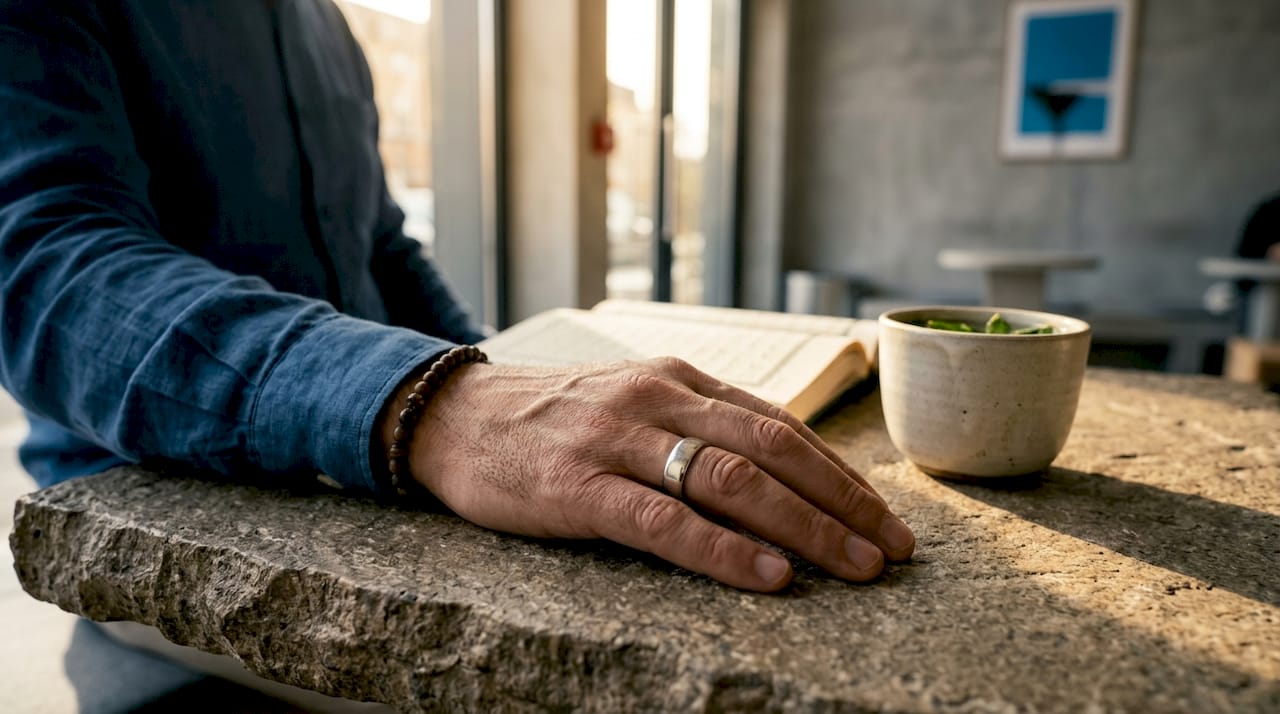
The silver ring may be worn on either hand, and scholars differ on which finger is preferred. Some follow the practice of wearing it on the right hand, while others cite the left. Both positions have scholarly support, so you are not bound to one specific finger.
What about necklaces, bracelets, and earrings for men? These are generally impermissible for men because they constitute adornment beyond what Islamic tradition permits for the male gender. The principle is that men are not to imitate women in dress or adornment, and these items are culturally and religiously associated with feminine decoration.
- Silver ring: Permissible, one ring only
- Gold ring: Forbidden for men in all forms
- Necklaces and bracelets: Not permissible for men
- Earrings: Not permissible for men
- Silver-plated rings: Permissible; silicon rings are impermissible for both men and women
Pro Tip: If you are a Muslim man choosing a ring as a gift or for yourself, look specifically for sterling silver or silver-plated options. Gold-plated rings, even with a silver base, carry scholarly disagreement and are best avoided.
2. Permissible jewellery types for Muslim women
Women’s jewellery in Islam is broadly permitted, and this generosity in ruling reflects the Qur’anic acknowledgment of women’s natural inclination toward adornment. Women may wear gold or silver rings, as well as necklaces, bracelets, earrings, bangles, and chains made from non-precious metals. The latitude here is wide compared to men.
Rings occupy a special category in Islamic jurisprudence. For women, both gold and silver rings are permissible. For other jewellery types such as necklaces and bracelets, women may use a broader range of materials including costume jewellery and base metals. The ring category carries stricter material rules than other adornment types.
Gold jewellery for women is permissible, but it comes with a financial obligation. If a woman’s gold jewellery reaches the nisab threshold, zakāt becomes due on it. Scholars warn that neglecting zakāt on gold is a serious matter, though the wearing itself remains halal.
- Gold rings: Permissible for women
- Silver rings: Permissible for women
- Gold and silver necklaces: Permissible
- Bracelets and bangles: Permissible in gold, silver, and other materials
- Earrings: Permissible to own and wear, with display conditions discussed below
- Gold-plated or silver-plated items: Permissible for women; silicon rings remain impermissible
Pro Tip: When purchasing gold-plated jewellery, check whether the base is stainless steel or brass. Stainless steel bases are more durable and less likely to cause skin reactions, making them a practical choice for everyday halal jewellery practices.
3. How public display and modesty affect permissibility
Owning jewellery and displaying it are two separate rulings in Islam. A woman may own and wear earrings, but displaying them to non-mahram men is impermissible because ears are considered part of the awrah that must be covered in public. This distinction is one of the most misunderstood aspects of Islamic views on jewellery.
The Qur’an instructs believing women not to display their zeenah (adornment) except what is apparent, and except to their husbands, mahram relatives, and other believing women (Surah An-Nur, 24:31). Scholars across all four major madhabs agree that the ears fall within the awrah, meaning hijab must cover them when in the presence of non-mahram men.
Here is how the display rules apply in practice:
- At home or in women-only gatherings: A woman may display all her jewellery freely, including earrings, necklaces, and bracelets.
- In public with hijab: Jewellery on the ears, neck, and wrists may be worn, but ears must remain covered. Necklaces tucked under clothing and bracelets under sleeves are the safest approach.
- Rings in public: Rings on the fingers are generally considered part of what is “apparent” and are permissible to display.
- Anklets: Scholars generally hold that anklets must not be visible or audible to non-mahram men, as the Qur’an specifically mentions women not striking their feet to reveal hidden adornment.
“And let them not stamp their feet to make known what they hide of their adornment.” (Surah An-Nur, 24:31)
Jewellery permissibility is therefore not overridden by hijab requirements. Rather, hijab defines the conditions under which jewellery may be displayed. The two rulings work together, not against each other.
4. Islamic rulings on selling and gifting jewellery
Selling jewellery to Muslims and non-Muslims is permissible as a general rule. The condition that changes this ruling is knowledge or strong belief that the buyer will use the jewellery in a prohibited way. Selling jewellery becomes impermissible when the seller knows or has strong reason to believe the buyer will misuse it, because this constitutes assisting in sin.
For most transactions, the seller does not know the buyer’s intention, and the default assumption is permissible use. This means jewellery businesses and individual sellers are not required to interrogate every customer. The obligation arises only when misuse is evident or highly probable.
- Selling to a Muslim woman: Permissible by default; impermissible if seller knows she will use it in a prohibited manner
- Selling to a non-Muslim woman: Permissible; non-Muslims are not bound by Islamic rulings, so the seller bears no sin
- Selling gold to a Muslim man: Impermissible if the seller knows it is for personal adornment
- Gifting jewellery: Follows the same logic. Gifting a silver ring to a Muslim man is a beautiful sunnah-aligned act. Gifting gold to a man knowing he will wear it is not permissible.
| Transaction Type | Permissibility | Condition |
|---|---|---|
| Selling to Muslim woman | Permissible | Unless misuse is known |
| Selling to non-Muslim woman | Permissible | No restriction applies |
| Selling gold to Muslim man | Impermissible | If intended for personal wear |
| Gifting silver ring to Muslim man | Permissible | Sunnah-aligned practice |
| Gifting gold to Muslim woman | Permissible | Zakāt obligation applies |
The practical concern for most Muslims centers on use context rather than absolute prohibition. This nuance matters especially for business owners who sell jewellery to a diverse customer base.
5. Comparison of permissibility by jewellery type and material
Islamic rulings on jewellery differ significantly based on gender, material, and jewellery type. The table below provides a clear reference for the most common questions about what jewellery is allowed in Islam.
| Jewellery Type | Muslim Men | Muslim Women | Material Notes |
|---|---|---|---|
| Ring | Silver only, one ring | Gold or silver permitted | Silicon rings impermissible for both |
| Necklace | Not permissible | Permissible | Gold, silver, and other metals allowed |
| Bracelet | Not permissible | Permissible | Wide material range allowed |
| Earrings | Not permissible | Permissible to own and wear | Must not be visible to non-mahrams |
| Bangles | Not permissible | Permissible | |
| Gold-plated items | Not permissible | Permissible | Stainless steel base recommended |
| Silver-plated ring | Permissible | Permissible |
The distinction between rings and other jewellery types is one of the most important structural features of Islamic jewellery rulings. Rings carry their own fiqh category with specific material and quantity rules, while other adornment types are governed more broadly by gender norms and modesty principles. Understanding this separation makes the entire framework much clearer.
You can explore halal jewellery materials in more depth to understand how stainless steel, gold plating, and silver interact with Islamic guidelines for both men and women.
Key takeaways
Islamic jewellery permissibility is determined by gender, jewellery type, and display context, with rings carrying the strictest and most specific rulings for both men and women.
| Point | Details |
|---|---|
| Men’s jewellery is limited | Only a single silver ring is permissible; all gold and other adornments are forbidden. |
| Women have broad permission | Gold, silver, and other materials are allowed across rings, necklaces, bracelets, and earrings. |
| Display matters as much as ownership | Earrings and other jewellery must not be visible to non-mahram men when hijab is observed. |
| Rings are a distinct legal category | Rings carry stricter material rules than other jewellery types for both genders. |
| Transactions require intention awareness | Selling or gifting jewellery becomes impermissible only when misuse by the recipient is known. |
Why the gold rule for men is more misunderstood than people realize
People often assume the gold prohibition for men is a minor cultural preference. It is not. It is a firm ruling with consistent scholarly consensus across all four major madhabs, grounded in explicit prophetic narrations. I have seen many Muslims, especially those new to practicing, treat gold-plated rings as a gray area simply because the base metal is not gold. The safer and more accurate position is to avoid gold plating for men entirely.
The earring question for women is equally misunderstood, but in the opposite direction. Many assume that because earrings are permissible, wearing them visibly with hijab is fine. The ruling separates ownership from display, and that distinction is not widely taught. A woman wearing earrings at home or in a women-only gathering is fully within her rights. The same earrings visible beneath a loosely worn hijab in public cross into a different ruling.
My honest advice: treat the ring category with special care because it has the most specific rules. For everything else, the general principle is that women have wide latitude and men have narrow permission. When in doubt about a specific piece, consult a scholar you trust rather than relying on general internet searches. The role of jewellery in Muslim identity is meaningful and worth getting right.
— Elias
Jewellery that honors your faith, designed with intention
If you are looking for jewellery that reflects Islamic values without compromising on beauty, Cairojewellery offers a thoughtfully curated selection designed for Muslim men and women. From silver-toned rings engraved with Qur’anic verses to gold-plated necklaces carrying words of strength and protection, every piece is made with faith at its center.
Whether you are choosing a gift for someone you make dua for, or looking for a daily reminder of your own, Cairojewellery’s pieces are built on a stainless steel base with gold or silver plating, keeping both durability and Islamic guidelines in mind. Explore the full collection at Cairojewellery and find something that carries meaning far beyond its material.
FAQ
What jewellery can Muslim men wear?
Muslim men may wear only a single silver ring. Gold and all other jewellery types including necklaces, bracelets, and earrings are not permissible for men.
Is gold jewellery halal for Muslim women?
Yes, gold jewellery is permissible for Muslim women. Zakāt becomes obligatory on gold jewellery if it reaches the nisab threshold, but wearing it remains halal.
Can Muslim women wear earrings with hijab?
Women may own and wear earrings, but ears are part of the awrah and must be covered in front of non-mahram men. Earrings are fully permissible in private or women-only settings.
Are gold-plated rings permissible in Islam?
Gold-plated rings are permissible for women. For men, silver-plated rings are permissible but gold-plated rings are not, as the gold prohibition applies regardless of whether it is solid or plated.
Is it permissible to sell jewellery to non-Muslim women?
Yes, selling jewellery to non-Muslim women is permissible. The ruling changes only when the seller knows the buyer, Muslim or otherwise, will use the jewellery in a clearly prohibited way.