Muslim fashion is far more than a dress code. For millions of people around the world, the role of faith in Muslim fashion shapes every decision, from the cut of a sleeve to the choice of a headscarf, in ways that are deeply personal, spiritually meaningful, and constantly evolving. And yet, outsiders often reduce it to a single image or a single rule. The reality is far richer. Faith does not constrain Muslim fashion. It gives it purpose, depth, and a language that speaks across cultures, generations, and continents.
Table of Contents
- Key takeaways
- The role of faith in Muslim fashion starts with scripture
- Modesty as a spectrum across cultures and regions
- Faith, identity, and empowerment in Muslim fashion
- Challenges in modest fashion today
- Practical ways to integrate faith and style daily
- My honest perspective on where Muslim fashion is heading
- Wear your faith with meaning: Cairojewellery
- FAQ
Key takeaways
| Point | Details |
|---|---|
| Faith is the foundation | Islamic scripture and prophetic tradition provide the spiritual basis for modest dress, not cultural habit. |
| Modesty is a spectrum | There is no single “correct” Muslim outfit. Interpretation, culture, and region all shape how modesty looks. |
| Fashion is a declaration | Wearing faith-aligned clothing is an act of identity and belonging, not just religious compliance. |
| Commercialization has risks | When modest fashion goes mainstream, faith-rooted meaning can get lost if Muslim voices are pushed aside. |
| Accessories carry meaning too | Jewelry and adornment in Islamic practice are governed by principles, and meaningful pieces reinforce spiritual identity. |
The role of faith in Muslim fashion starts with scripture
The foundation of modest dress in Islam is not tradition for tradition’s sake. It comes directly from divine instruction. The Quran commands believers, particularly women, to cover their adornments and to dress in ways that reflect privacy, respect, and piety. Surah An-Nur is among the most referenced passages when scholars and Muslim communities discuss Islamic clothing significance.
Beyond the Quran, the Sunnah, the recorded practices and teachings of the Prophet Muhammad (peace be upon him), provides further guidance. The Prophet encouraged followers to avoid extravagant dress and to distinguish themselves through simplicity and humility in how they dressed. This was not about austerity. It was about intentionality. What you wear should reflect who you are and who you are striving to be.
“Modesty is a branch of faith.” — Prophet Muhammad (Sahih Muslim)
The role of the Quran in Muslim fashion, then, is not a set of restrictions so much as a framework for meaning. It answers the question every person of faith asks when getting dressed: does what I’m wearing reflect my values? That question is at the heart of every modest fashion choice, whether someone is wearing a simple headscarf or a full covering.
Key faith-based principles that shape Islamic dress include:
- Covering the awrah: The parts of the body considered private in Islamic teaching, which vary between men and women and across scholarly opinion.
- Avoiding arrogance and extravagance: Clothing should not be worn to show off wealth or status.
- Distinction through modesty: Dress should signal belonging to a faith community that values humility.
- Intentionality (niyyah): The purpose behind what you wear matters as much as the garment itself.
These principles do not produce one uniform style. They produce a mindset. That distinction matters enormously when you want to understand how faith shapes clothing across the Muslim world.
Modesty as a spectrum across cultures and regions
Walk into a mosque in Jakarta, a market in Marrakech, and a Muslim community center in London, and you will see three entirely different expressions of modest dress. All of them can be rooted in sincere faith. This is one of the most misunderstood aspects of Islamic clothing significance: there is no single correct look.
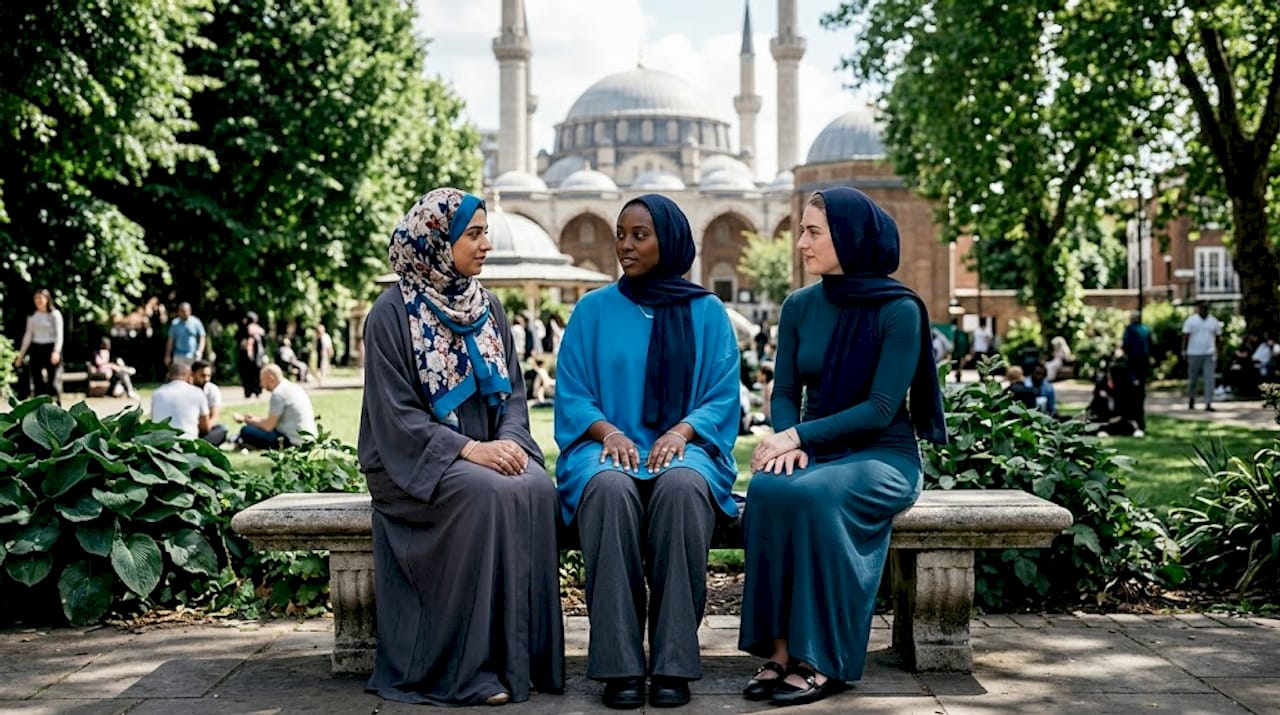
Research confirms that modesty is interpreted as a spectrum, with variations in coverage, fit, and style all possible while remaining consistent with Islamic values. A woman in Southeast Asia might pair a loose tunic with a loosely draped scarf. A woman in the Gulf might wear an abaya and niqab. A Muslim woman in Sweden might choose tailored trousers, a long-sleeve top, and a pinned hijab in a contemporary style. All three are making faith-driven choices.
| Region | Common modest fashion expressions | Cultural influences |
|---|---|---|
| Middle East | Abayas, niqab, modest embroidered fabrics | Traditional craftsmanship, Gulf heritage |
| South Asia | Salwar kameez, dupatta, layered modest silhouettes | Subcontinental textile culture |
| Southeast Asia | Batik-influenced modest wear, draped hijab styles | Local artisan traditions |
| Western Europe | Contemporary modest layers, structured hijab styling | Blending Western streetwear with faith values |
Cultural influences on Muslim fashion are real and significant. They do not dilute faith. They express it through local beauty, history, and community identity. The tension arises when Western mainstream fashion positions modesty as a trend or aesthetic choice while erasing where those values actually come from.
Pro Tip: If you are building a modest wardrobe from scratch, start with versatile base layers in neutral tones that work across seasons. Then add cultural or faith-specific pieces that carry personal meaning, whether a patterned scarf from your heritage or a piece of meaningful Islamic jewelry that speaks to your beliefs.
Muslim women in particular navigate what researchers describe as cognitive dissonance when they try to participate in mainstream Western fashion industries while honoring faith-based modesty. This is not a personal failing. It is a systemic pressure that the fashion world has yet to fully resolve.
Faith, identity, and empowerment in Muslim fashion
What makes modest fashion powerful is that it communicates something before a single word is spoken. For many Muslims, how they dress is a visible declaration of who they are and what they believe. This is faith and style in Muslim culture operating at its most profound level.
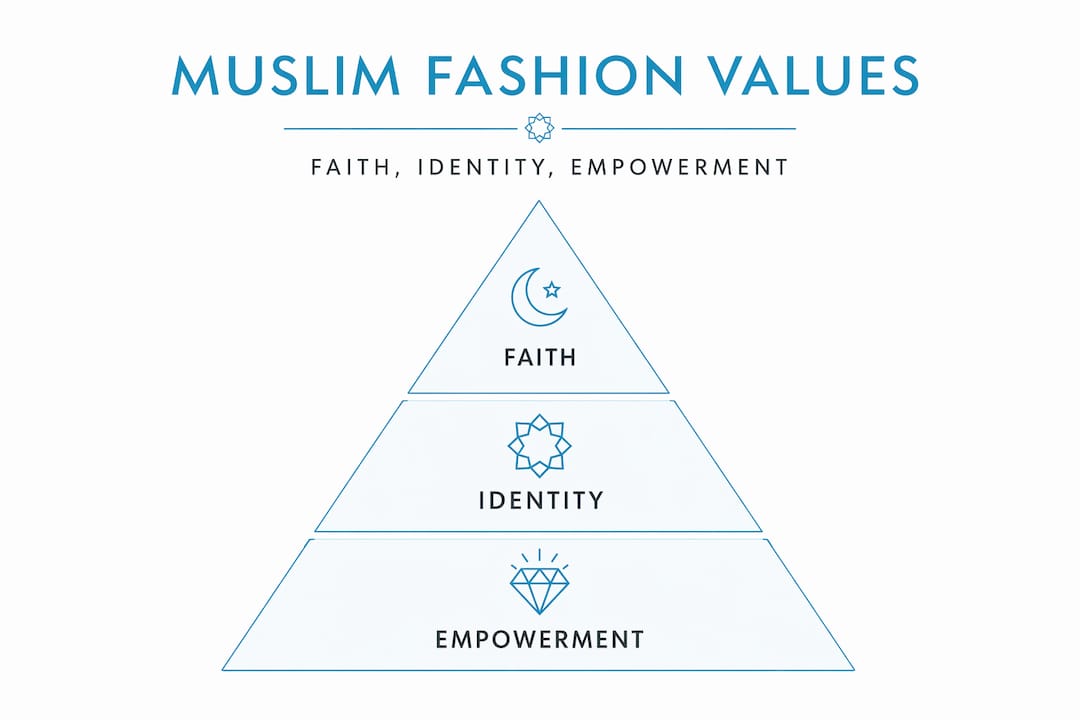
Modest fashion creatives around the world have spoken openly about fashion as both religious commitment and personal expression. Designers, stylists, and content creators within Muslim communities are not dressing modestly because they have no other choice. They are choosing it, shaping it, and making it undeniably contemporary.
This empowerment narrative is important for a few reasons:
- It challenges the assumption that modest dress is imposed rather than chosen.
- It centers Muslim women as creative agents, not passive subjects of religious rules.
- It shows how faith-based fashion can be at the forefront of global style rather than a reaction to it.
- It creates community. When you see another person dressed with similar values, there is an immediate sense of belonging and recognition.
In Bangladesh, for example, modest garments have been found to serve as tools for class mobility and protection in public spaces. This illustrates something crucial: modest fashion is never just about covering the body. It is woven into social relationships, safety, and dignity.
The Muslim modest fashion movement has grown into a global force. Muslim spending on fashion is projected to reach $433 billion by 2028, a figure that reflects not just purchasing power but the depth of faith-linked identity that drives those choices. Modest fashion has moved well beyond religious attire into a lifestyle choice with genuine cultural weight.
Challenges in modest fashion today
The growth of modest fashion has brought real opportunities. It has also introduced tensions that people within Muslim communities feel acutely.
-
Commercialization eroding meaning: When major fast-fashion retailers release “modest collections,” they often detach styles from Muslim community origins, reducing faith-rooted garments to trends. The aesthetic remains. The meaning disappears.
-
Authenticity questions: Who gets to define modest fashion? When brands outside Muslim communities profit from it while Muslim designers remain marginalized, that is an ethical problem worth naming clearly.
-
Sustainability and ethics: Many Muslim consumers now actively choose sustainable and ethically made clothing because overconsumption contradicts Islamic values around gratitude and restraint. Slow fashion, in this sense, is deeply aligned with the spirit of modest dress.
-
The “trend” trap: When hijab styling or modest silhouettes go viral on social media, there is a risk that the conversation shifts entirely to aesthetics, leaving behind the spiritual substance that makes these choices meaningful in the first place.
Pro Tip: When shopping for modest fashion, look for brands that are transparent about their supply chains and that actively engage Muslim designers and community voices. Buying from faith-conscious brands, especially those that support charitable causes, makes your fashion choices an extension of your values rather than just your wardrobe.
For a thoughtful look at how adornment works in Islamic law, it is worth understanding what the tradition actually permits and encourages, rather than relying on assumptions.
Practical ways to integrate faith and style daily
Bringing your faith into your daily clothing choices does not require a complete wardrobe overhaul. It requires clarity about what your values actually are, and then making choices that reflect them honestly.
Here is how to approach it practically:
- Know your own intention: Before asking whether an outfit is “modest enough,” ask whether your intention in wearing it is honest. Niyyah, the inner intention, matters in Islamic practice.
- Respect your cultural roots alongside your faith: A South Asian Muslim does not have to dress like a Gulf Arab to be authentically modest. Honor the clothing traditions of your heritage as part of your identity.
- Choose quality over quantity: Islamic teaching discourages excess and waste. A smaller wardrobe of well-made, meaningful pieces reflects faith values more faithfully than a closet full of fast-fashion finds.
- Consider what you wear as a gift to yourself: Clothing that reflects your faith is a daily reminder of who you are. That is not a small thing.
- Extend the same intentionality to accessories: The role of jewelry in Muslim identity is often overlooked, but pieces engraved with Qur’anic verses or Islamic symbols carry the same spiritual weight as the garments you choose.
You can also look to platforms like Wildflower Wardrobe for ideas on how modest styling works across different occasions and contexts, particularly if you are balancing professional settings, social events, and everyday life.
My honest perspective on where Muslim fashion is heading
I’ve followed the Muslim modest fashion movement for years, and what strikes me most is not the growth in the market. It is the shift in confidence. When I first started paying attention, modest fashion felt like it was always explaining itself to the mainstream. Now it does not bother. And that matters.
What I have observed is that the Muslims driving the most interesting fashion conversations are not waiting for permission from Western style gatekeepers. They are creating their own language. Designers in Lagos, Jakarta, London, and Istanbul are building aesthetics rooted in faith and culture that have no interest in being validated by a Paris runway.
My concern, though, is what happens when the market catches up in the wrong way. Commercialization without authenticity is a real threat. When a brand with no connection to Muslim community experience launches a “modest collection,” it is extracting the aesthetic while discarding the meaning. That is not representation. It is appropriation in a modest cut.
What I believe is this: the future of Muslim fashion belongs to those who understand that the role of religion in attire choices is not a limitation to overcome. It is the very thing that makes those choices worth making. The spirituality behind the clothing is not a backstory. It is the story.
— Elias
Wear your faith with meaning: Cairojewellery
At Cairojewellery, we believe that modest fashion does not stop at the neckline. The pieces you choose to wear closest to your skin, the jewelry that carries a verse from the Quran, a symbol of protection, or a reminder of Allah’s mercy, are as much a part of your faith expression as anything else in your wardrobe. Our Ayatul Kursi collection and pieces like the With Hardship Comes Ease necklace are designed to be worn with intention, not just style.
Every order through Cairojewellery also contributes to our Donations and Support System, which includes our ongoing collaboration with ShareTheMeal and support for Palestine. Because wearing your faith is one thing. Living it is another. Whether you are building a modest wardrobe or looking for a meaningful gift for someone you would make dua for, we are here.
FAQ
What is the role of faith in Muslim fashion?
Faith provides the foundational motivation for Muslim fashion choices, particularly around modesty. Qur’anic verses and prophetic teachings guide believers to dress with intention, humility, and respect for both body and community.
How does the Quran influence Muslim dress?
The Quran, particularly Surah An-Nur, instructs believers to cover their adornments and dress modestly. This guidance forms the scriptural basis for modest dress as a spiritual obligation, not simply a cultural norm.
Is modest fashion the same across all Muslim cultures?
No. Modest fashion varies significantly by region, culture, and personal interpretation. A woman in Southeast Asia and a woman in the Gulf may both dress modestly according to their faith while looking entirely different.
Why is modest fashion growing globally?
Muslim spending on fashion is projected to reach $433 billion by 2028, driven by a combination of faith identity, creative expression, and cultural pride. Modest fashion has become a lifestyle choice with global relevance.
Can jewelry be part of modest fashion in Islam?
Yes. Islamic tradition permits adornment, including jewelry, within certain guidelines. Pieces that carry Qur’anic verses or Islamic symbols can serve as an extension of faith expression and a daily reminder of spiritual values.