Arabic jewelry carries far more than beauty on its surface. Every motif, every engraved letter, every carefully formed curve of gold holds a story that stretches back centuries. Yet today, arabic jewelry is also one of the most wearable and personally meaningful categories in contemporary fashion. Whether you are drawn to the spiritual weight of Quranic calligraphy, the elegance of stacked gold bangles, or the intimacy of a name written in Arabic script, there is a piece designed to carry something real. This guide covers everything you need to know, from deep symbolism to modern trends to thoughtful gifting.
Table of Contents
- Key Takeaways
- The cultural and spiritual symbolism of Arabic jewelry
- Types of Arabic jewelry and how they are made
- Modern trends and personalization
- Choosing and gifting Arabic jewelry thoughtfully
- My perspective on Arabic jewelry’s evolving role
- Explore meaningful Arabic jewelry collections
- FAQ
Key Takeaways
| Point | Details |
|---|---|
| Symbolism runs deep | Arabic motifs like calligraphy and geometric patterns represent faith, patience, and spiritual harmony. |
| Gold purity affects durability | 14K and 18K gold balance durability with richness; 24K is softest and traditionally hammered for wearability. |
| Personalization is accessible | Custom Arabic name necklaces are available at a wide range of price points, from gold-plated to solid gold. |
| Gifting requires care | Verify Arabic script accuracy with a digital proof before ordering any custom name piece. |
| Modern styles invite layering | Stacking bangles and mixing calligraphy pendants with minimalist chains is a growing and meaningful trend. |
The cultural and spiritual symbolism of Arabic jewelry
There is a misconception that Arabic jewelry is simply decorative. It is not. The motifs used in Arabic and Islamic jewelry carry centuries of meaning, and understanding them changes the way you experience the piece on your wrist or around your neck.
The most prominent symbols include:
- Islamic calligraphy: Script from the Quran or names of Allah rendered in fluid Arabic letters. These are not purely aesthetic choices. Jewelry with Arabic script represents spiritual qualities like patience and gratitude, carrying the weight of faith as wearable art.
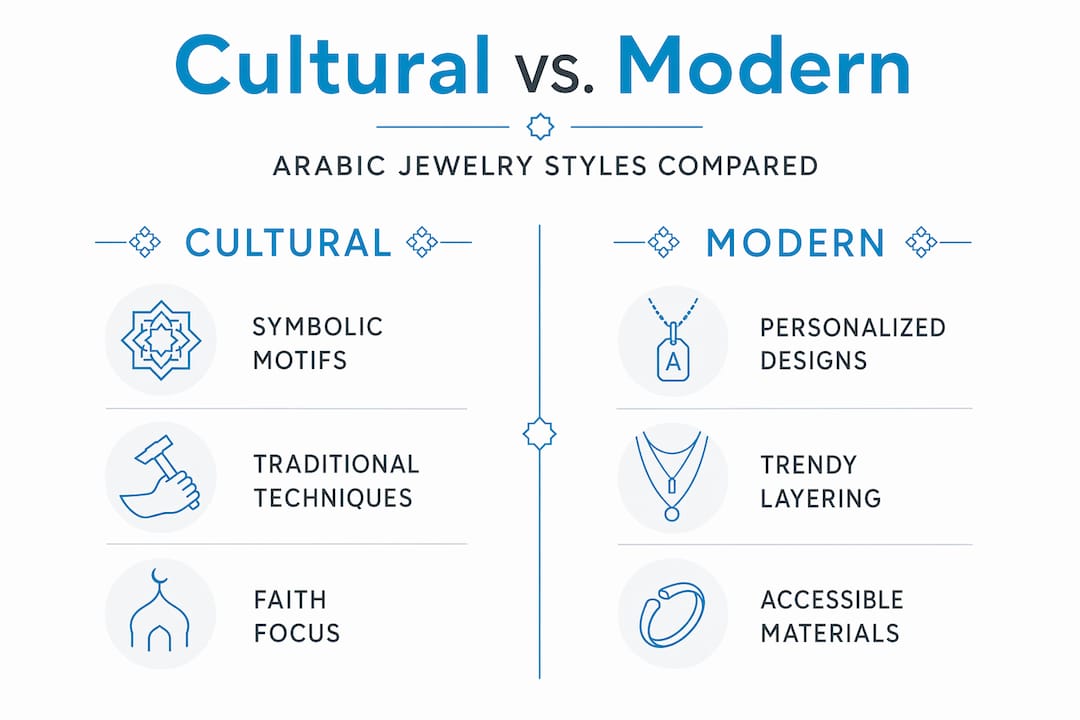
- Geometric patterns: Interlocking stars, hexagons, and lattice designs rooted in centuries-old Islamic manuscripts and architecture. These patterns represent order and harmony, offering the wearer a sense of visual and spiritual balance.
- Crescent moon and star: One of the most recognized symbols in Islamic culture, representing divine guidance and the lunar calendar that marks Ramadan, Eid, and other sacred occasions.
- Palm tree: A symbol of resilience, provision, and life in arid landscapes. It appears across traditional Gulf and Bedouin jewelry designs.
- The hand (Khamsa or Hamsa): Associated with protection and the warding off of harm, this motif transcends regional boundaries across the Arab world.
Islamic geometric patterns do not just sit on the surface of a piece. They create a sense of balance and spiritual harmony that goes far beyond decoration, and many wearers describe feeling that inner steadiness when they look at their jewelry.
“When you wear a piece of Arabic calligraphy jewelry, you carry a reminder. It is engraved there, always visible, always present, even on the days when you need it most.”
This talismanic dimension is especially relevant during Ramadan. Arabic jewelry gifts rise in significance during this holy month, when pieces engraved with Quranic verses or meaningful phrases connect the wearer to their devotion in a deeply personal way. The spiritual meaning of Islamic jewelry is a subject worth exploring fully before you choose a piece for yourself or someone you love.
Types of Arabic jewelry and how they are made
Understanding the different forms of Arabic jewelry helps you choose with intention. The category is broader than most people realize, and the craftsmanship behind each type varies significantly.
Gold bangles
Arabic gold bangles are among the most iconic forms of jewelry in Middle Eastern culture. Traditionally worn in stacks, they are gifted at weddings, births, and celebrations as tangible expressions of love and prosperity. 18K gold bangles weigh approximately 12 grams and measure around 15 cm in circumference. They are popular for both formal occasions and everyday wear.
Pure 24K gold is naturally soft, which is why traditional artisans use hammering techniques to harden the metal. Hammered 24K gold bangles develop a unique texture that reflects personal artistry, and the resonant sound of artisan-made bangles moving together is itself considered a mark of authenticity and soulfulness.
Custom Arabic name necklaces
A custom Arabic necklace featuring someone’s name in Arabic script is one of the most intimate pieces you can give or receive. These range from gold-plated styles for everyday wear to solid 14K or 18K gold commissions. Custom solid gold name necklaces typically take 8 to 10 days to produce. Many jewelers include complimentary design tweaks to make the calligraphy feel right before production begins.
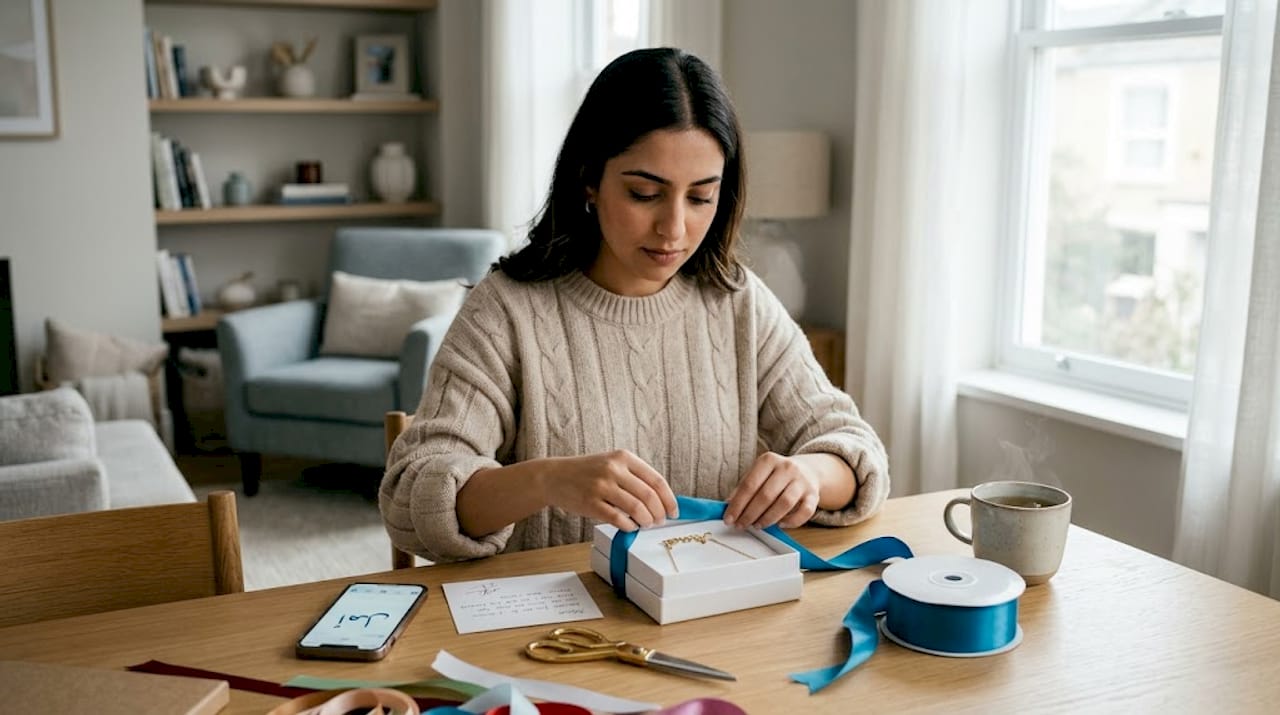
Arabic name plates necklaces are also available in silver finishes, making them accessible to a wider audience. An arabic name necklace silver piece in stainless steel with a silver coating can carry the same visual elegance as a solid precious metal version, at a fraction of the cost.
Traditional Bedouin and headpiece jewelry
Bedouin jewelry from the Arabian Peninsula and North Africa is among the most elaborate in the world. Heavy silver chokers, layered coin necklaces, and ornate headpieces traditionally marked a woman’s status, tribe, and marital standing. These pieces are still crafted by artisans and collected as cultural heirlooms.
| Jewelry type | Typical material | Common use |
|---|---|---|
| Stacked bangles | 18K or 24K gold | Daily wear, celebrations, gifting |
| Arabic name necklace | 14K gold, silver, or plated | Personal wear, milestone gifts |
| Calligraphy pendant | Gold, silver, stainless steel | Spiritual reminder, Ramadan gifts |
| Bedouin choker | Sterling silver with coins | Cultural ceremonies, collectors |
| Arabic gold rings | 14K or 18K gold | Engagement, anniversary, self-expression |
Pro Tip: When comparing gold karat values, remember that 24K is the purest but requires traditional hardening techniques for daily wear. For a piece you will wear every day, 18K strikes the best balance between richness and durability.
Modern trends and personalization
Arabic jewelry has moved well beyond the traditional markets of Jeddah and Cairo. Today, a person in Stockholm, Los Angeles, or London might be wearing a stackable Muslim jewelry set that layers a Quranic verse pendant over a delicate name bracelet, with a hammered gold bangle on the same wrist. The mix is intentional. It is personal. And it honors heritage while feeling entirely current.
The biggest modern trends shaping Arabic jewelry right now include:
- Layering and stacking: Customers are moving away from single statement pieces and building collections of bangles and chains that tell a story. Arabic gold bangles stack beautifully and allow for both cultural expression and daily versatility.
- Custom script personalization: The demand for a custom arabic name necklace has grown significantly. People want their name, their child’s name, or a meaningful word rendered in Arabic calligraphy. This is not just a trend. It is a form of identity.
- Minimalist calligraphy: Traditional motifs are being refined into cleaner, smaller forms. A single word in Arabic script on a thin chain reads as both modern and meaningful.
- Affordable entry points: Top arabic script jewellery affordable options now exist across every price point. Gold-plated stainless steel pieces let younger buyers or budget-conscious shoppers access the aesthetic and symbolism without a large investment.
Affordable Arabic-style jewelry ranges from around $20 for gold-plated initials to over $1,400 for solid gold custom commissions. This price range means there is genuinely something for everyone, whether you are shopping for yourself or choosing a gift.
Pro Tip: If you are new to layering, start with one statement piece, such as a custom arabic necklace with a name or Quranic verse, and add a thin plain chain at a different length. The visual contrast between ornate and minimal creates depth without overwhelming the look.
Choosing and gifting Arabic jewelry thoughtfully
Choosing Arabic jewelry as a gift is a meaningful act. It requires a little more thought than picking a generic bracelet, and that extra care is exactly what makes it memorable.
Here is how to approach the process with confidence:
-
Match the symbolism to the person. A piece featuring Ayatul Kursi is a powerful gift for someone who values protection and faith. An arabic name bracelet with a child’s name in Arabic script is deeply personal for a parent. Think about what the recipient holds dear before you choose a motif.
-
Understand the metal and its significance. Gold carries cultural weight in the Arab world, particularly for women. Silver also has deep spiritual meaning in Islam, and many Muslim men prefer silver jewelry. Verify that the materials align with the recipient’s values, including halal jewelry considerations around specific metals and plating.
-
Order custom name pieces carefully. For any custom arabic name necklace or arabic name plates necklaces, always provide the name in verified Arabic script, not just a phonetic spelling. Custom name jewelry commissions rely on digital proofs to prevent errors. Review the proof carefully before approving production.
-
Set a realistic budget. Gold-plated options are beautiful and accessible. Solid gold pieces are lasting investments. Decide what you want the piece to represent before deciding what to spend.
-
Consider styling from day one. If you are buying bangles, think about whether the recipient already has pieces they might layer with. Arabic gold rings work beautifully when paired with simple stacking rings for an effortlessly curated hand.
Pro Tip: For a custom arabic necklace, ask the jeweler to include a small card explaining the meaning of the script. This is especially valuable when gifting to someone who does not read Arabic, because it transforms the jewelry into a story they can share.
My perspective on Arabic jewelry’s evolving role
I have spent years paying close attention to how Arabic jewelry moves between tradition and modern identity. What strikes me most is how much emotional work these pieces do.
A person who wears a custom arabic name necklace gold piece is not simply wearing their name. They are asserting something. A presence. A heritage. A faith. That is why I think the mass-market approach to Arabic jewelry often misses the point. When a piece is made quickly without attention to the script or the symbolism, it becomes decoration. When it is made with care, it becomes a companion.
The rise of arabic gold bangles in mainstream fashion has been both exciting and complicated to watch. On one hand, more people are discovering the beauty of Arabic craft. On the other hand, pieces stripped of their cultural context lose the very thing that made them worth wearing in the first place. My honest advice: buy less and choose better. One piece with genuine symbolism will mean more to you five years from now than a drawer full of forgettable ones.
This is why I respect brands that build meaning into every piece they create, putting the spiritual intention first and the aesthetics second. That order matters.
— Elias
Explore meaningful Arabic jewelry collections
If you are ready to find a piece that carries real meaning, Cairojewellery offers a thoughtful collection of faith-centered Arabic jewelry designed for everyday wear and meaningful gifting. From the Ayatul Kursi collection featuring powerful Quranic calligraphy to pieces that pair beautifully when layered and stacked, every design is created with intention. Whether you are shopping for yourself or someone whose faith inspires you, Cairojewellery ships worldwide from Sweden and supports the ShareTheMeal initiative with every order. For guidance on purchasing with confidence, the safe online jewelry shopping guide is a helpful resource before you browse. This is the kind of gift that means something.
FAQ
What makes Arabic jewelry culturally significant?
Arabic jewelry carries symbolism rooted in faith, identity, and history. Motifs like Islamic calligraphy, geometric patterns, and crescent moons represent spiritual values and are worn as reminders of devotion, not simply as decoration.
What is the best gold karat for everyday Arabic jewelry?
18K gold is widely considered the most practical choice for daily wear. It offers a rich color and good durability. Pure 24K gold is softer and traditionally requires hammering techniques to make it wearable over time.
How do I order a custom Arabic name necklace without errors?
Always provide the name written in verified Arabic script and request a digital proof from the jeweler before production begins. Most reputable makers of custom arabic name necklace gold pieces offer complimentary revisions at this stage.
Are there affordable options for Arabic script jewelry?
Yes. Gold-plated stainless steel arabic name bracelet and pendant styles are available from around $20, making arabic script jewelry accessible without sacrificing the visual meaning of the design.
Can Arabic jewelry be gifted to non-Muslims?
Absolutely. Many people of different backgrounds wear Arabic calligraphy jewelry for its beauty and the universal values it represents, such as strength, patience, and gratitude. A thoughtful note explaining the meaning makes the gift even more special.