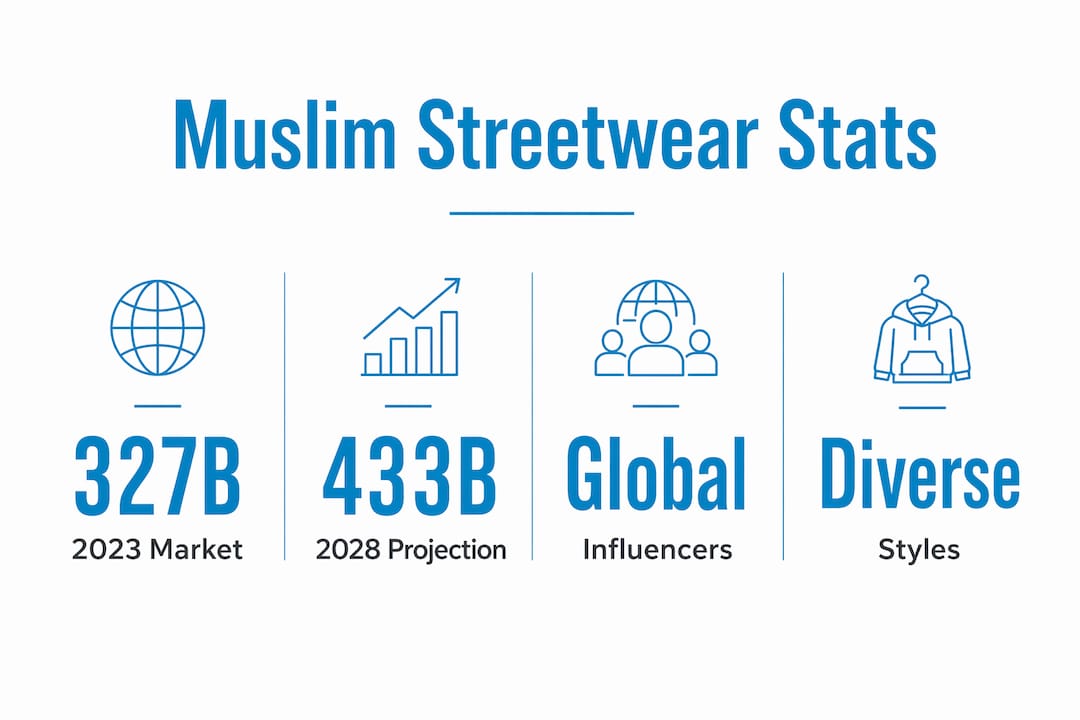
Muslim streetwear culture is defined as the fusion of Islamic modesty principles with contemporary urban streetwear aesthetics, producing a faith-conscious style that lets modern Muslim wearers express identity without compromising values. This movement draws on oversized silhouettes, Arabic calligraphy graphics, and layered construction to create looks that feel equally at home on city streets and in Muslim communities worldwide. Brands like ZIKRZIBA and modest fashion designers from Jakarta to London have helped establish Islamic street fashion as a recognized creative force. The global modest fashion market, projected to reach $433 billion by 2028, confirms this is far more than a niche trend. It is a cultural movement with deep roots and serious commercial momentum.
What is Muslim streetwear culture and what defines it visually?
Muslim streetwear culture is built on a specific design logic: oversized streetwear construction combined with modest layering and fabric opacity engineering, so that faith-conscious coverage is maintained while the wearer still projects a street-cool aesthetic. That balance is the defining characteristic. It is not simply modest clothing that happens to look casual, nor is it conventional streetwear with a headscarf added. The two aesthetics are genuinely merged at the construction level.
The visual vocabulary of this style includes several recurring elements:
- Oversized silhouettes: Wide-shoulder hoodies, dropped-hem shirts, and wide-leg pants provide coverage without appearing restrictive or shapeless.
- Arabic calligraphy and Islamic motifs: Words like Sabr (patience) and Tawakkul (trust in Allah) appear as bold graphic designs on tees and outerwear, merging identity with expressive urban design.
- Islamic geometric patterns: Intricate geometric art drawn from centuries of Islamic architecture translates naturally onto streetwear graphics. You can explore the history behind these patterns in this guide to Islamic geometric design.
- Reimagined traditional garments: Abayas appear in streetwear-influenced cuts with modern textures. Hijabs are styled with bucket hats, caps, and layered outerwear. The draped sleeve abaya from JV London is a strong example of how traditional silhouettes absorb contemporary tailoring.
- Layering as both style and function: Longline tees under open shirts, or wide-leg trousers under oversized coats, serve both aesthetic and modesty purposes simultaneously.
Pro Tip: When building a modest streetwear outfit, prioritize silhouette first. An oversized outer layer over a fitted inner layer gives you coverage, structure, and visual depth without adding bulk. Fabric weight matters too: heavier cotton or linen blends maintain shape and opacity better than lightweight jersey.
The faith-inspired messaging in this style is not decorative. It carries meaning for the wearer, functioning as a wearable reminder of belief. That spiritual dimension is what separates Muslim streetwear from simply “modest clothing” in a loose-fitting cut.

How Muslim streetwear reflects identity and cultural pride
Muslim streetwear is a mode of self-expression that allows Muslim youth to represent their beliefs confidently in public spaces where faith is not always visible or celebrated. For many wearers, choosing a hoodie printed with Bismillah or a wide-leg trouser set in a modest cut is a deliberate act of cultural pride, not just a fashion decision. The clothing communicates belonging, values, and identity all at once.
The role of faith in Muslim fashion shapes these choices in ways that go beyond aesthetics. Modesty in this context is understood as a lifestyle orientation, not a dress code imposed from outside. That distinction matters because it explains why Muslim streetwear looks so different from person to person. One wearer might choose a minimalist gray oversized set with no visible religious text. Another might wear a graphic hoodie with a full Quranic verse across the back. Both are expressing the same underlying values through different visual languages.
Social media has been the primary engine of this culture’s global spread. Influencers like Dina Torkia and Ascia al-Faraj shaped modest fashion visibility on platforms like Instagram and YouTube well before luxury fashion brands recognized the market. They built engaged global audiences by showing how faith-conscious dressing could be genuinely stylish, not a compromise. That digital foundation is why Muslim streetwear trends now move from Jakarta to New York in weeks rather than years.
The cultural appeal of this style also extends beyond Muslim consumers. Non-Muslim buyers are drawn to the aesthetic qualities: the clean oversized lines, the meaningful graphic work, and the considered construction. This crossover appeal has helped Islamic street fashion gain traction in mainstream fashion conversations without losing its cultural specificity.
How big is the Muslim streetwear market globally?
The modest fashion market, which Muslim streetwear sits within, is one of the fastest-growing segments in global fashion. Muslim consumer spending on modest fashion is forecast to grow from $327 billion in 2023 to $433 billion by 2028, at a compound annual growth rate of approximately 5.8%. That scale means Muslim streetwear is not a subcultural footnote. It is a commercially significant category attracting investment, runway attention, and startup activity.
Regional styles within this global market vary considerably:
| Region | Dominant Style Characteristics |
|---|---|
| Middle East | Bold colored abayas with intricate embroidery; statement modest wear with luxury fabric choices |
| Southeast Asia | Experimental blends of traditional batik and streetwear cuts; vibrant color palettes |
| Western Europe | Minimalist modest streetwear emphasizing fit, fabric quality, and lifestyle identity over religious signaling |
| North Africa | Modernized kaftans and djellabas with contemporary tailoring, as showcased at Moroccan Fashion Week 2026 |
These regional differences are not just aesthetic preferences. They reflect how local cultural histories, climate, and community norms shape the way modesty is interpreted and expressed through clothing. A modest streetwear brand that resonates in Kuala Lumpur may need to adapt its visual language significantly to connect with buyers in Amsterdam or Casablanca.
Local creative hubs feed global trends through digital platforms. Designers in Lagos, Istanbul, and London are producing modest streetwear content that reaches global audiences within hours of posting. The Muslim streetwear ecosystem links these local creative centers to global fashion cycles through influencer-led distribution and social commerce. That speed of trend translation is unique to this generation of Muslim fashion.
What are the common misconceptions about modest Muslim streetwear?
The most persistent misconception about Muslim streetwear is that modesty is a single, fixed religious standard applied uniformly across all Muslim communities. Modesty in this context is fluid, culturally nuanced, and deeply individual. It is a lifestyle choice shaped by personal faith, cultural background, geography, and personal taste. That fluidity is a feature, not an inconsistency.
Several other misconceptions are worth addressing directly:
- “Modest fashion is purely aesthetic.” This ignores the strong market forces, consumer values, and brand strategies driving the category. The modest fashion market merges faith-driven styling with commercial innovation, responding to a diverse and growing customer base with real purchasing power.
- “Muslim streetwear is always overtly religious.” Many Western Muslim wearers adopt minimalist modest streetwear that downplays religious markers entirely, favoring versatile everyday fashion that emphasizes fit and fabric quality over visible faith signaling.
- “It is only for women.” Muslim streetwear includes a strong menswear tradition: oversized thobes styled with sneakers, graphic hoodies with faith-inspired text, and wide-leg trousers worn with longline shirts are all part of the male expression of this culture.
- “It is a recent trend.” The roots of faith-conscious urban dressing stretch back decades in Muslim-majority cities. What is recent is the global visibility and commercial scale, driven by social media and digital commerce.
Pro Tip: If you are new to modest streetwear styling, start with one statement piece, such as a graphic hoodie with Arabic calligraphy, and build around it with neutral, well-fitted basics. The calligraphy piece carries the cultural weight; the rest of the outfit supports it without competing.
Understanding these distinctions helps you appreciate Muslim streetwear as a genuinely complex cultural phenomenon, not a simplified dress code with a streetwear filter applied over it.
Key takeaways
Muslim streetwear culture is a globally significant fashion movement defined by the deliberate fusion of Islamic modesty principles with urban streetwear construction, driven by a $433 billion market and shaped by regional creativity and digital influence.
| Point | Details |
|---|---|
| Core design logic | Oversized silhouettes and fabric opacity engineering balance street aesthetics with faith-conscious coverage. |
| Cultural symbolism | Arabic calligraphy, Islamic geometric motifs, and faith-inspired slogans make clothing a wearable expression of belief. |
| Market scale | Muslim modest fashion spending is projected to reach $433 billion by 2028, confirming serious commercial weight. |
| Regional diversity | Styles range from bold embroidered abayas in the Middle East to minimalist lifestyle fashion in Western Europe. |
| Modesty is individual | Modest dressing is a personal lifestyle choice, not a fixed standard, which explains the wide visual range within this culture. |
Why Muslim streetwear deserves more serious attention from the fashion world
By Elias
What strikes me most about Muslim streetwear culture is how much creative intelligence goes into solving a design problem that most mainstream fashion simply ignores. Building a garment that is genuinely modest, genuinely stylish, and genuinely wearable on city streets requires real craft. The silhouette engineering alone, getting an oversized fit to look intentional rather than shapeless, takes skill that deserves recognition on its own terms.
What I have observed over years of watching this space is that the fashion industry tends to notice Muslim streetwear only when it becomes commercially undeniable. Influencers like Dina Torkia built massive audiences and shaped global trends long before luxury brands came looking. That pattern tells you something important: the creative energy in this culture is self-generated, community-driven, and authentic in a way that is increasingly rare in fashion.
The deeper meaning behind these garments also matters. When a wearer chooses a hoodie with Tawakkul printed across the chest, they are not just making a style choice. They are carrying a reminder with them. That relationship between clothing and spiritual meaning is something that faith jewelry shares, and it is what makes this entire category feel different from trend-driven fashion. The intention behind the piece changes how it is worn and what it means to the person wearing it.
My honest view is that Muslim streetwear is one of the few places in contemporary fashion where identity, craft, and commerce are genuinely aligned. That alignment is worth paying attention to, whether you are a Muslim consumer, a fashion professional, or simply someone who cares about where culture is heading.
— Elias
Explore Muslim streetwear culture through faith-inspired accessories
Muslim streetwear culture extends beyond clothing. Accessories that carry faith and symbolism complete the look and deepen its meaning. Cairojewellery, a Sweden-based Islamic jewellery brand, designs pieces built around exactly that intention: Qur’anic verses, Islamic symbolism, and the kind of spiritual reminder you want close to you every day. The Ayatul Kursi Bracelet and Olive Branch Ring are designed to complement modest streetwear styling while carrying genuine spiritual weight. Whether you are building a personal look or searching for a meaningful gift, Cairojewellery offers modest fashion jewellery that speaks to both faith and contemporary style. Shop safely with worldwide shipping from a brand that puts meaning first.
FAQ
What is Muslim streetwear culture in simple terms?
Muslim streetwear culture is the fusion of Islamic modesty principles with contemporary urban streetwear aesthetics, combining oversized silhouettes, faith-inspired graphics, and cultural symbolism into a style that is both street-cool and faith-conscious.
What makes modest streetwear different from regular modest fashion?
Modest streetwear specifically draws from urban streetwear construction, including oversized fits, bold graphics, and layered styling, rather than formal or traditional modest dressing. The result is a casual, expressive style rooted in both faith and street culture.
Who are the key influencers in Islamic street fashion?
Influencers like Dina Torkia and Ascia al-Faraj have been central to spreading Muslim streetwear globally, building large audiences on Instagram and YouTube that established the aesthetic well before mainstream fashion brands entered the space.
How big is the Muslim modest fashion market?
Muslim consumer spending on modest fashion is projected to grow from $327 billion in 2023 to $433 billion by 2028, making it one of the fastest-growing segments in global fashion.
Does Muslim streetwear only apply to women’s clothing?
No. Muslim streetwear includes a strong menswear tradition, with oversized thobes styled with sneakers, faith-inspired graphic hoodies, and wide-leg trousers all forming part of how Muslim men express urban style and faith through clothing.